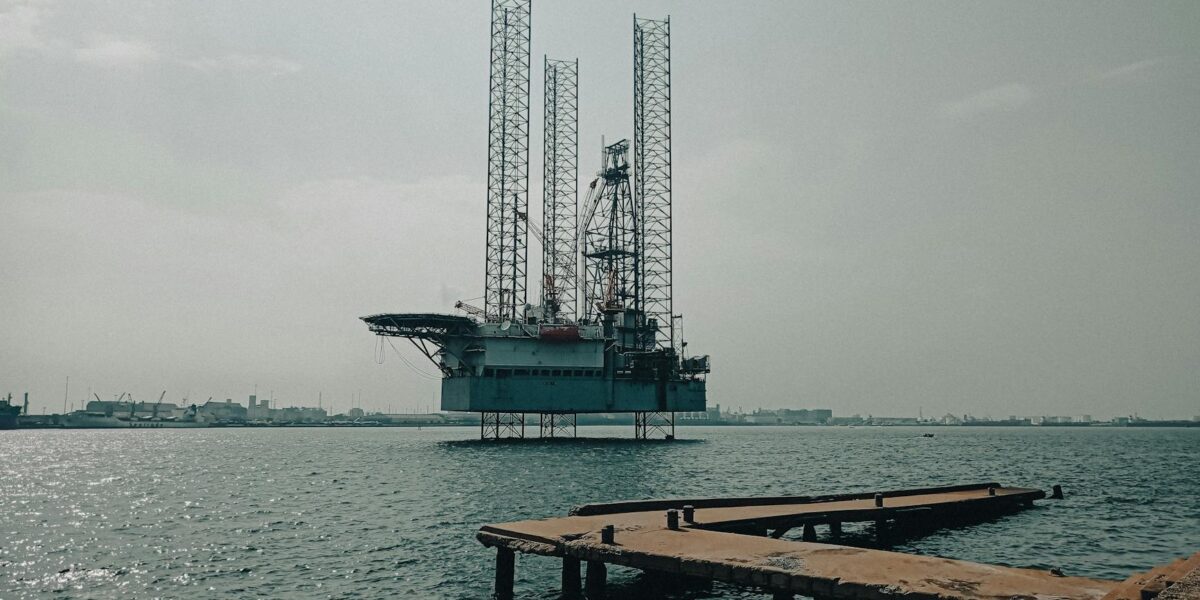
Iran has closed the Strait of Hormuz. After two decades of repeated threats that successive U.S. administrations treated as bluffing, the waterway through which roughly 21 percent of the world's traded oil passes has been effectively blockaded. President Trump, who withdrew from the Iran nuclear deal and imposed maximum pressure sanctions, fatally underestimated both Iran's resolve and its operational capacity to execute what many analysts had dismissed as rhetoric. The move marks a fundamental rupture in global energy markets and geopolitical assumptions.
The closure came into effect on June 2, 2026, following an escalation that began with a U.S. military incident in the Persian Gulf and Iranian counter-mobilization. Revolutionary Guard forces have positioned anti-ship missiles, naval assets, and drone swarms across the Strait's critical chokepoints. Commercial shipping has halted. Global oil markets, which had priced in only a 5-15 percent risk premium for Hormuz disruption, are now in freefall. Brent crude has spiked 38 percent in 48 hours. For India—which imports approximately 80 percent of its crude oil needs and sourced 16 percent of those imports from Iran before sanctions tightened—the implications are both immediate and severe.
India's energy security equation has shifted overnight. New Delhi, which maintained careful balance between U.S. pressure and energy pragmatism, now faces a genuine supply crunch as alternative corridors through the Red Sea remain contested and pipeline routes through Central Asia remain underdeveloped. The Petroleum Planning and Analysis Cell has already convened emergency sessions. Refiners in Gujarat and Tamil Nadu are reviewing inventory strategies. The rupee weakened 2.1 percent against the dollar in early trading as capital markets digested the shock.
What Happened
The Strait of Hormuz has been a theater of threats since the 1980s. Iran's Revolutionary Guard Corps (IRGC) has repeatedly warned of closure during periods of heightened tension—most notably in 2007, 2011, 2018 following the U.S. withdrawal from the Joint Comprehensive Plan of Action (JCPOA), and again in 2020 after the assassination of Qasem Soleimani. Each time, analysts and policymakers outside Iran treated these statements as negotiating posture rather than operational doctrine. The Trump administration, which had made "maximum pressure" its cornerstone Iran policy, explicitly dismissed closure scenarios as technologically and militarily implausible. Senior Pentagon officials stated publicly that any Iranian attempt would be swiftly neutralized by U.S. naval superiority.
This assessment proved catastrophically wrong. On May 31, the USS Dewey, a guided-missile destroyer, conducted what U.S. Central Command described as a "routine transit" near Iranian territorial waters. Iranian forces interpreted the maneuver as a provocation and fired two anti-ship missiles. Neither struck the vessel—a near-miss that U.S. officials said demonstrated Iranian incompetence. The Trump administration authorized return fire on Iranian radar installations. By June 1, Iran had positioned multiple Khalij Fars anti-ship cruise missiles along the Strait, deployed Q-313 kamikaze drones, and announced a comprehensive blockade of all commercial traffic. The announcement was backed by operational reality. Within 24 hours, 34 commercial vessels were stranded. Insurance premiums for transiting the Strait moved beyond economically viable levels. Effective closure was achieved not through military capability that could be easily overwhelmed, but through a credible threat profile that made passage genuinely dangerous.
What distinguishes this moment from previous Iranian threats is operational execution. The IRGC had positioned assets over months—a fact U.S. intelligence appears to have underestimated. Satellite imagery reviewed by independent analysts suggests systematic deployment of missile batteries across Hormuz's northern shore, at Qeshm Island, and at Hengam Island over the preceding eight weeks. This was not a hasty response but a calculated escalation following months of Trump administration pressure including new sanctions on Iranian banking and oil sectors in March 2026. Iran's message was unambiguous: further tightening would result in closure. The administration did not believe it. Now the market is pricing in a sustained disruption that could last weeks or months.
Why It Matters For Professionals
The war impact oil prices has moved from theoretical concern to tangible portfolio shock. Energy is the fastest-moving component of global inflation. A sustained 35-40 percent oil price increase—which is where markets are now pricing in Hormuz closure scenarios—translates to immediate cost pressures across every sector that depends on energy inputs or transportation. Airlines face acute fuel hedging challenges. Shipping companies see margins compress. Fertilizer prices, which are already elevated, will spike again, affecting agricultural businesses and food-linked inflation across emerging markets. For professionals in India, the implications ripple through multiple channels.
First, inflation expectations have shifted upward. The Reserve Bank of India will face pressure to maintain or potentially raise policy rates despite softer growth. Any professional with floating-rate debt—mortgage, auto loan, business credit facility—faces immediate pressure on debt servicing costs. The second-order effect is capital allocation. Foreign institutional investors, facing both energy inflation and geopolitical uncertainty, will likely reduce India exposure and rotate toward defensive assets. This creates volatility in equity markets and potential currency weakness. Professionals with foreign currency liabilities or those planning international education funding face adverse exchange rate movements. The third effect is employment and wage dynamics. Energy-intensive sectors including steel, cement, chemicals, and power generation will face margin compression. Some sectors may defer hiring or rationalize headcount.
For investors specifically, the immediate question is asset allocation. Crude futures remain in a volatile discovery phase with no clear equilibrium. Holding significant exposure to oil price rallies (through energy stocks or oil ETFs) offers upside, but only if you can tolerate the volatility and have conviction that closure lasts longer than market consensus. A more prudent approach for most professionals is defensiveness: reviewing exposure to cyclical sectors, ensuring adequate liquid reserves given currency volatility, and reconsidering international allocation decisions. Businesses with strong dollar earnings or those hedged against commodity inflation will outperform.
What This Means For You
If you are salaried and based in India, your immediate concern should be inflation trajectory and potential rate hikes. The RBI does not move overnight, but within 60 days, expect inflation expectations to shift visibly. If you are considering a major purchase (real estate, vehicle) or refinancing debt, the next 4-6 weeks are critical windows—lock in rates before any central bank tightening. If you already carry debt at floating rates, begin modeling scenarios where prime lending rates move up 50-100 basis points. That is not alarmist; that is where markets are pricing this scenario.
If you have investment exposure, run a portfolio stress test. How much of your equity allocation is in energy-sensitive sectors (auto, airline, logistics, infrastructure)? How much is in defensive sectors (pharma, FMCG, IT services)? A 30-40 percent shift toward defensive positioning is defensible given current uncertainty. If you have foreign currency exposure or are planning overseas education or travel, consider locking in exchange rates now rather than betting on rupee stability. The rupee will likely weaken further if capital outflows accelerate. For entrepreneurs and business owners, the time to stress-test supply chains and hedging strategies is now, not after margin compression becomes acute.
What Happens Next
The immediate trajectory depends on U.S. and regional diplomatic responses. The Trump administration has military capability to contest Iranian control of the Strait, but doing so risks direct naval conflict and further oil market shock. Secretary of State Blinken is reportedly engaging with Gulf allies and regional powers to explore de-escalation pathways. China has signaled concerns about the closure affecting its own oil imports and has privately urged restraint on both sides. Saudi Arabia and the UAE, which have been improving ties with Iran, are positioned as potential mediators, though their leverage is limited.
Timeline-wise, expect closure to persist for at least 2-3 weeks. That is the minimum required for operational de-escalation talks to progress meaningfully. During this window, oil markets will likely remain volatile and elevated. Alternative supply routes—including pipeline flows from the Caucasus through the Caspian, overland routes from Central Asia, and expanded tanker capacity around the Cape of Good Hope—will gradually come online, but cannot replace Hormuz volume quickly. Strategic Petroleum Reserve releases from the U.S., Saudi Arabia, and other producers may stabilize prices from current levels, but the structural shock to the market is real. For professionals, expect 6-8 weeks of elevated energy costs and geopolitical uncertainty before any semblance of normal market function resumes.
3 Frequently Asked Questions
How long do analysts think the Strait of Hormuz closure will last?
A: There is no consensus. Optimistic scenarios suggest diplomatic resolution within 2-3 weeks, bringing gradual reopening. Pessimistic scenarios price in 8-12 weeks of effective closure if military escalation occurs. Market pricing currently assumes 4-6 weeks of severe disruption, with partial recovery of traffic thereafter. The duration depends entirely on whether the Trump administration opts for military confrontation or negotiation—a choice that remains unmade.
What does this mean for India's crude oil prices and petrol costs at the pump?
A: India imports 80 percent of its crude needs, making it acutely exposed to global price shocks. A 35-40 percent spike in crude translates to roughly ₹8-12 per liter increase in petrol and diesel costs at retail, though government pricing mechanisms and subsidies may absorb some of this impact. Expect visible increases at pumps within 2-3 weeks as inventory costs flow through to retail pricing. Diesel-dependent sectors including transport, agriculture, and power generation will see immediate cost pressures.
Should I be concerned about my investments in energy stocks or oil-linked funds right now?
A: Short-term volatility is extreme, making this a difficult environment for buy-and-hold investors unless you have conviction on a specific outcome. If you believe closure will be brief (2-3 weeks), energy stocks offer upside as the market reprices for supply constraints. If you believe closure will extend longer or that military escalation occurs, energy stocks face margin compression and demand destruction concerns. Most professionals should avoid large directional bets. Neutral or slightly defensive positioning—holding energy exposure but reducing cyclical exposure—is more prudent given uncertainty.
Why is no one talking about the intelligence failure? Two decades of explicit Iranian threats, months of visible military deployment, and a U.S. intelligence apparatus with $100+ billion annual budgets somehow missed or dismissed the most significant geopolitical event of 2026. That is not a failure of capability. That is a failure of assumption. Trump administration officials dismissed closure as implausible because they assumed Iran would not dare act. That assumption was wrong. Markets now face genuine structural uncertainty, and professionals need to act accordingly.
Here is what to do: First, if you carry floating-rate debt, call your bank today and request a rate lock or conversion to fixed-rate terms. Do not wait 60 days. Second, if you have meaningful equity exposure to cyclical sectors (auto, airlines, logistics, construction), reduce it by 25-30 percent over the next two weeks and rotate proceeds to defensive sectors or fixed income. This is not panic; this is prudent rebalancing into uncertainty. Third, if you have any currency needs—education, property purchase abroad, business imports—lock in exchange rates this week. The rupee will stabilize eventually, but not before moving 3-5 percent weaker from current levels. The market is repricing geopolitical risk in real time. Move before consensus does.

[…] technologically advanced nations, and about how electoral outcomes in Seoul can reverberate across global markets and geopolitical alliances. For professionals managing exposure to South Korean assets, […]