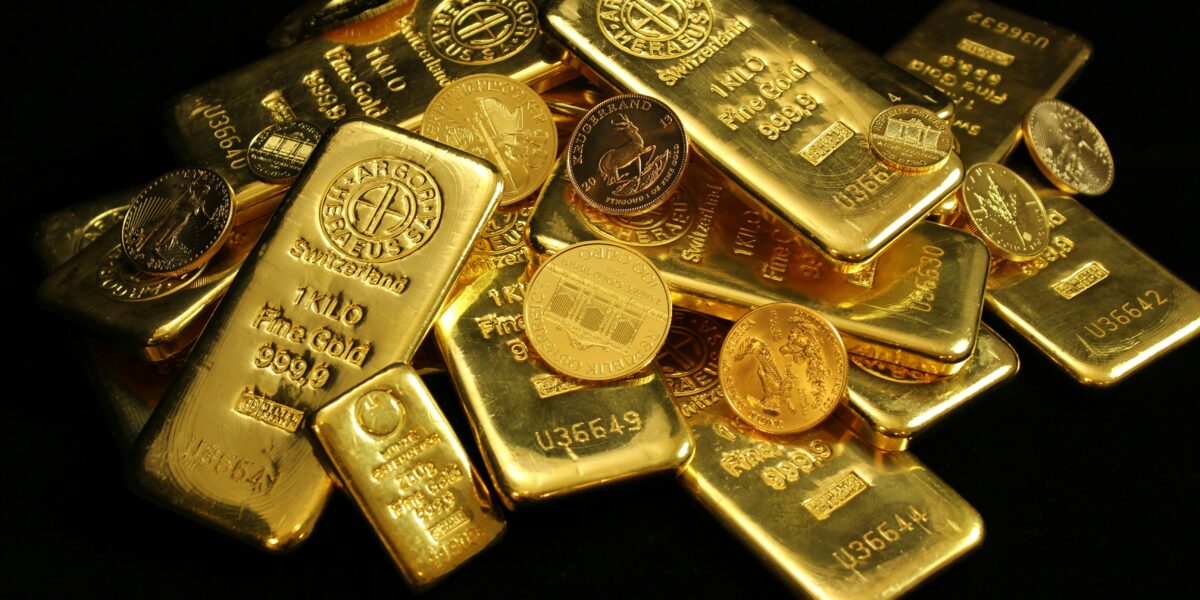
Gold in India has never permanently fallen. That single fact explains why 55 crore Indian households own it.
Today, with gold prices correcting from their recent highs near ₹90,000 per 10 grams, investors are nervous. But before you make any decision — sell, hold, or buy more — understanding where gold has come from puts everything in perspective.
Gold Price History in India — The Complete Timeline
The journey from ₹100 to ₹85,000 per 10 grams took six decades. Here are the numbers every Indian investor should know:
1964: ₹63 per 10 grams. Gold was a luxury only the wealthy could afford. India had just weathered the Sino-Indian war, and the rupee was under pressure.
1974: ₹506 per 10 grams. The oil crisis of 1973 sent global commodity prices surging. Gold nearly doubled in three years. Investors who held through the panic made generational wealth.
1980: ₹1,330 per 10 grams. The Soviet invasion of Afghanistan, Iranian revolution, and rampant global inflation drove gold to its first major peak. Then it crashed 40% over the next two years — and everyone said gold was finished.
1991: ₹3,466 per 10 grams. India’s balance of payments crisis forced the government to pledge 67 tonnes of gold to the Bank of England as collateral for an emergency loan. Ironically, this humiliation marked the beginning of India’s economic liberalisation — and gold’s next multi-decade rally.
2000: ₹4,400 per 10 grams. The dot-com bust made investors nervous about equities. Gold was boring, unloved, and exactly at the start of its biggest bull run in history.
2008: ₹12,500 per 10 grams. The global financial crisis made gold the only safe haven. Indian investors who bought after the dot-com bust tripled their money in eight years.
2012: ₹31,050 per 10 grams. A near tripling in four years. This was driven by the US Federal Reserve’s quantitative easing programme flooding global markets with dollars — weakening the dollar and pushing gold higher.
2020: ₹56,200 per 10 grams. COVID-19 triggered the fastest gold rally in modern history. In a single year, gold rose 28% in India as the world printed money at unprecedented scale.
2024: ₹72,000 per 10 grams. Central banks — led by China, India, and Russia — bought record quantities of gold, reducing dependence on the US dollar. The de-dollarisation trade was real and it pushed gold to new highs.
2025-26: ₹85,000 — ₹90,000 per 10 grams. The Iran war risk premium, continued central bank buying, and US fiscal deficit concerns drove gold to all-time highs before the current correction.
Why India Should Care
Gold is not just an investment in India — it is the financial backbone of 55 crore households. India is the world’s second-largest gold consumer, importing 700-800 tonnes annually. When global gold prices move, the impact on India is direct and immediate.
A 10% fall in gold prices reduces India’s import bill by approximately $4-5 billion annually — positive for the current account deficit and the rupee. This is why the RBI watches gold prices as closely as it watches crude oil.
For Indian investors specifically, gold in rupee terms has almost always outperformed gold in dollar terms. The reason is simple: the rupee depreciates against the dollar over time. A 3-5% annual rupee depreciation adds directly to gold returns for Indian holders. This structural advantage means Indian investors in gold have historically done even better than their global counterparts.
The Hidden Angle Everyone Missed
Every gold correction in history has been followed by a higher high. Every single one.
The 1980 crash from ₹1,330 to ₹800 looked catastrophic. It took 7 years to recover. But by 1991 gold was at ₹3,466 — nearly 3x the previous peak.
The 2012-2015 correction from ₹31,000 to ₹26,000 made headlines about gold’s death. Five years later gold was at ₹56,000.
What drives each new high? A new reason to be afraid. In 2008 it was banks collapsing. In 2020 it was a pandemic. In 2024 it is wars and de-dollarisation. There will always be a next reason. The current correction from ₹90,000 to ₹85,000 — a 5% dip — is within the normal range of gold’s historical volatility. It is not a structural breakdown.
Market Intelligence: What the Numbers Say
Three data points matter right now. First, central bank gold buying. The World Gold Council reports that central banks bought 1,037 tonnes of gold in 2023 — the second-highest on record. India’s RBI itself added 27 tonnes in 2024. When the buyer with the deepest pockets in the world is accumulating, the direction is clear.
Second, the US fiscal position. America’s national debt crossed $35 trillion in 2024. Every dollar printed to service that debt makes gold — which cannot be printed — more valuable relative to paper currency. This structural driver has not changed.
Third, the Iran risk premium. With the Middle East conflict affecting oil supply routes, gold carries an additional geopolitical premium. If tensions de-escalate, gold could correct further in the short term. If they escalate, the premium increases.
Three Scenarios for What Happens Next
Scenario 1 — Soft landing (~60% probability): Gold consolidates between ₹82,000 and ₹88,000 for the next 3-6 months as the Iran situation stabilises. This is a buying opportunity for long-term investors. Target: ₹1,00,000 by 2027.
Scenario 2 — Further correction (~30% probability): Gold falls to ₹75,000-78,000 if the US dollar strengthens sharply. This would be an even stronger buying opportunity — the last time gold was at these levels was mid-2024.
Scenario 3 — Sharp rally (~10% probability): Iran conflict escalates into a regional war, oil crosses $120/barrel, and gold spikes above ₹1,00,000 within weeks.
Your Action Items This Week
If you hold gold already: Do nothing. You are holding one of history’s best long-term stores of value. A 5% dip after a 25% rally is normal market behaviour, not a reason to sell.
If you want to add gold to your portfolio: Consider buying in two tranches — half now at current levels, half if it falls to ₹80,000. This reduces timing risk without missing the move.
If you hold gold ETFs or Sovereign Gold Bonds: SGBs currently offer 2.5% annual interest over and above gold price appreciation — the best way to hold gold in India.
Watch this specific number: ₹80,000. If gold holds above ₹80,000 on a weekly closing basis, the bull trend is intact. A break below ₹80,000 on high volume would signal a deeper correction is possible.
For those considering jewellery purchases: Making charges add 8-25% to the cost of jewellery gold. For pure investment purposes, gold ETFs, digital gold, or SGBs are always more efficient than physical jewellery.
Sidd’s Take
₹63 to ₹85,000 in sixty years. That is a 1,349x return.
In the same period, a fixed deposit at 6% annual interest would have turned ₹63 into ₹4,800. Gold turned it into ₹85,000.
I am not saying gold has no risk — it clearly does. The 2012-2015 correction was brutal for anyone who bought at the peak. But the pattern over six decades is unmistakable: every dip was a gift, and every person who panicked and sold eventually watched gold make new highs.
My view on the current situation: this is not the beginning of a gold bear market. It is a pause in a structural bull run driven by de-dollarisation, central bank buying, and geopolitical uncertainty — none of which are going away. If you have been waiting to add gold to your portfolio, the next few weeks may be the entry point you were waiting for.

[…] Within 48 hours of the announcement, questions emerged about the startup's actual operational history, funding track record, and whether the deal represents genuine economic development or political […]