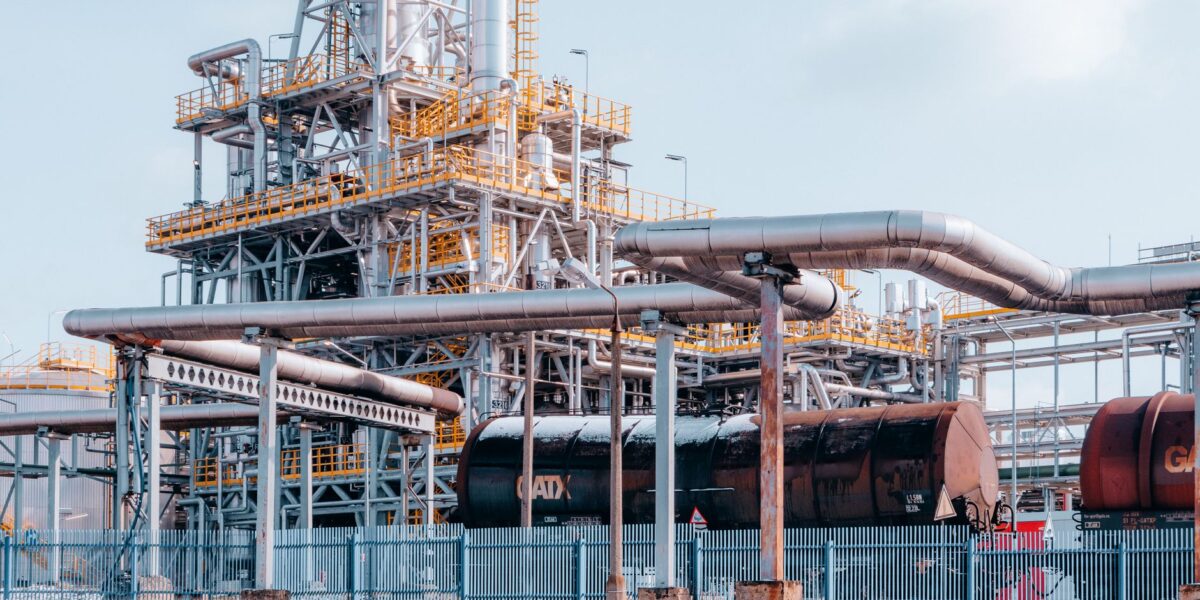
Oil prices are heading for their biggest weekly gain in months as military tensions between the United States and Iran intensify, raising the spectre of supply disruptions that could ripple across global markets. Brent crude traded at $85.34 per barrel on Wednesday, while West Texas Intermediate (WTI) crude climbed to $80.08, reflecting investor anxiety about one of the world's most critical chokepoints: the Strait of Hormuz, through which roughly one-fifth of global oil passes daily. The geopolitical crisis has shifted market sentiment dramatically, erasing weeks of weakness and reminding investors that energy prices remain vulnerable to forces beyond typical supply-demand dynamics.
The escalation follows recent US military strikes designed to degrade Iranian military capabilities, which Iran has answered with retaliation against regional allies. Tehran has now warned of widespread infrastructure damage if Washington follows through on threats to strike Iranian facilities directly. This tit-for-tat cycle represents the most serious military confrontation between the two nations in recent years, and it has institutional investors reassessing their commodity exposure at precisely the moment when energy security concerns have resurged as a legitimate market driver.
—ARTICLE START—
What Happened
The immediate trigger for this week's price surge came after the United States conducted military operations targeting Iranian defence infrastructure. The strikes, publicly framed as defensive measures against Iranian threats to American and allied interests in the region, prompted a rapid Iranian response against several US-aligned nations in the Middle East. Iran's retaliatory actions, while not directly targeting US territory, signalled escalating willingness to engage in direct military confrontation rather than pursue diplomatic channels.
Tehran's subsequent warning — that it would inflict "widespread infrastructure damage" on the United States if American threats to strike Iranian facilities materialise — has been interpreted by market participants as a credible threat to use its asymmetric capabilities, including potential disruption of the Strait of Hormuz. That waterway, located between Iran and Oman, serves as the passage for oil tankers transporting crude from the Persian Gulf to global markets. Any sustained blockade or military action in the strait would instantly constrain global oil supply and create a supply shock comparable to previous energy crises.
The oil market's response has been swift and substantial. Weekly gains are tracking at levels not seen since late 2024, when previous regional tensions briefly lifted prices. Traders have shifted from assuming stable supply conditions to pricing in material risk premiums for geopolitical disruption. Refined products — gasoline and diesel — have followed crude higher, though with less volatility, suggesting some confidence that while crude may stay elevated, actual supply chains have not yet broken down. This distinction matters: elevated prices without disruption represent a risk premium rather than a crisis.
Why It Matters For Professionals
For investment professionals, this resurgence of geopolitical risk as a market-moving force has immediate implications. Many portfolio managers had begun to discount Middle East tensions as "priced in" or manageable, particularly as broader economic indicators remained resilient. The current escalation forces a recalibration. Professionals managing equities must consider how higher oil prices filter through corporate earnings, particularly for energy-intensive sectors like aviation, logistics, and petrochemicals. Airlines, already operating on thin margins, could see fuel surcharges return as a material cost driver.
For those managing commodity funds or energy sector allocations, the question is whether current price levels represent a sustainable floor or a temporary spike. Historical patterns suggest that geopolitical premiums tend to fade once markets believe a crisis will not occur or once supplies actually stabilise. However, the durability of this risk depends entirely on whether the US and Iran move toward de-escalation or continued military posturing. Professionals need to distinguish between justified price increases reflecting real supply risk and irrational panic that creates trading opportunities.
Corporate strategists in sectors dependent on stable energy costs face near-term budget pressures. A sustained rise to $85-90 per barrel for Brent would begin affecting earnings guidance for the second half of 2026. Companies with long-term hedging strategies in place are cushioned; those without face immediate margin compression. For mid-career professionals in cost-sensitive industries, this environment may accelerate conversations about operational efficiency and sourcing strategies. Energy risk management, often a back-office function, has quietly become a business-critical competency.
What This Means For You
If you hold any equity or bond positions, higher oil prices will likely keep inflation expectations elevated, which could complicate monetary policy assumptions. Central banks will face renewed pressure to maintain restrictive stances even if growth slows, creating a difficult environment for rate-sensitive assets. Professionals with cash positions may find this environment attractive for deploying capital into equities at lower valuations, but only if you believe the geopolitical situation stabilises within 60-90 days.
If you work in energy, aviation, logistics, or petrochemicals, begin planning for scenario modelling that includes sustained crude at $85-90 per barrel. Most companies have already stress-tested these levels, but this week's moves signal that it is no longer a theoretical exercise. For those negotiating supplier contracts or pricing, this is the moment to understand whether your counterparties have already factored in higher energy costs. If they have not, you may have brief windows to lock in agreements before they adjust terms.
What Happens Next
The immediate question is whether military escalation continues or recedes. Historical precedent suggests that both the US and Iran have incentives to avoid all-out conflict, but both also face domestic political pressures that make backing down costly. The next 72 hours are critical: any additional military action will likely push Brent above $88 per barrel and trigger material financial market disruptions. Conversely, if both sides signal willingness to negotiate or hold fire, prices could retreat 5-7 percent within days.
Beyond the immediate military timeline, crude prices will likely remain range-bound between $78 and $92 per barrel until clarity emerges on Iranian retaliation plans and US response thresholds. Markets hate ambiguity, and right now ambiguity is the dominant feature. Oil traders are likely to treat any statements from Iranian or US officials as newsworthy, creating intraday volatility. Refined products may eventually decouple from crude as supply-chain impacts become clearer. By early August, if no major escalation occurs, expect a partial retreat in geopolitical premiums as market attention shifts back to demand data and macroeconomic fundamentals.
3 Frequently Asked Questions
How high could oil prices go if the Strait of Hormuz is actually blocked?
If a sustained blockade occurred, historical precedent from the 1973 oil embargo and 1990-91 Gulf War suggests prices could spike to $120-150 per barrel in the short term. However, such an extreme scenario would likely trigger strategic petroleum reserve releases from the US, Japan, and other major consumers, moderating the spike. A partial disruption affecting 20-30 percent of strait traffic might push Brent to $95-105 for sustained periods.
Does this energy spike help or hurt Indian energy security?
India imports roughly 85 percent of its crude oil, with significant volumes sourced from the Middle East and via Strait of Hormuz passage. Higher crude prices directly increase India's import bill and create inflation pressures on fuel and petrochemical-dependent sectors. However, India's strategic petroleum reserves and diversified sourcing (including from Russia, Africa, and Latin America) provide some insulation. A sustained crisis above $90 per barrel would impact India's current account deficit and inflation metrics, potentially constraining monetary policy flexibility.
Should I be buying oil futures or energy stocks right now?
That depends on your time horizon and risk tolerance. If you believe this crisis resolves within 60 days, energy stocks may offer attractive risk-reward as prices normalise. Oil futures at current levels embed a meaningful geopolitical premium; if that premium evaporates, you face losses. For most professionals, this is a "monitor and position for opportunities" environment rather than a "go all-in" moment. Consider waiting for clarity on military trajectories before committing capital.
Why is the market still treating energy supply disruptions as a tail risk rather than a structural reality? The Strait of Hormuz remains the world’s most fragile economic chokepoint, yet we spent five years acting as though geopolitical risk was solved. It was not. This week’s price action is a reminder that crude futures markets are not efficient at pricing low-probability, high-impact events until they are staring down the barrel.
Here is what you do: First, if you work in an energy-intensive industry, brief your CFO this week on what $90+ crude does to your unit economics and margins. Do not wait for the next earnings call to be surprised. Second, check whether your portfolio has actual energy exposure or if you are simply assuming energy is a small allocation you can ignore. In elevated-risk environments, small allocations can move portfolios materially. Third, for those with dry powder, prepare a checklist of companies worth buying at 10-15 percent lower valuations if geopolitical risk premiums continue to compress equities. This crisis will pass. When it does, there will be opportunities.
