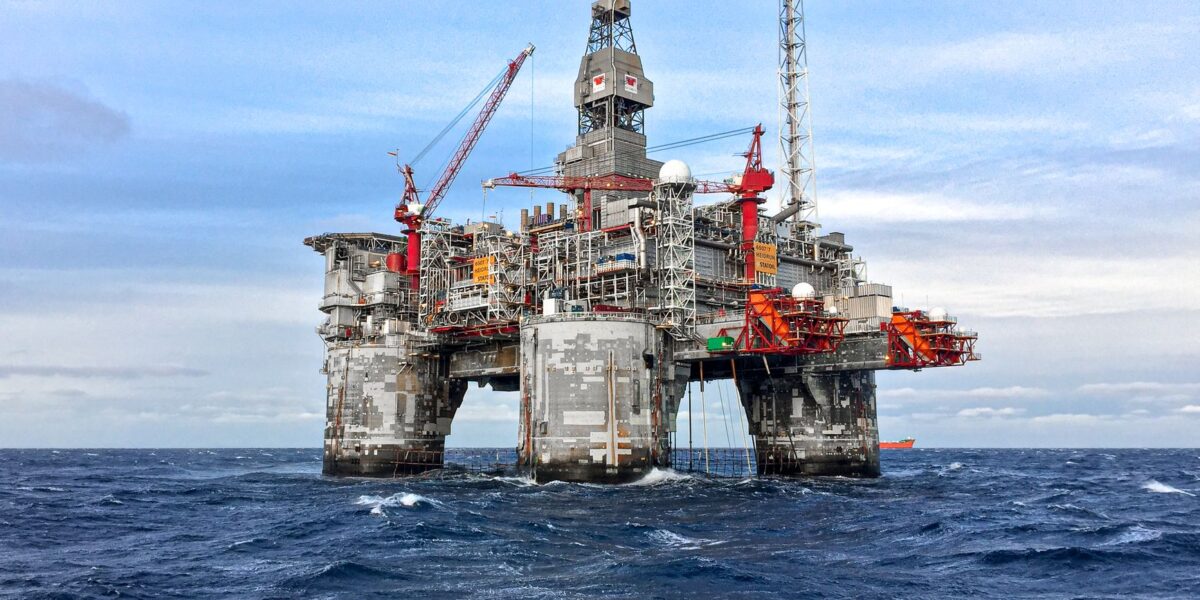
The dollar strengthened against major currencies on Friday as escalating tensions between the United States and Iran sent shockwaves through global energy markets, with Brent crude climbing to $90 per barrel. Investor sentiment remained fragile following last week's market turbulence, while semiconductor stocks continued to face valuation pressure amid broader economic uncertainty. The confluence of geopolitical risk and monetary policy debate has created a precarious environment for portfolio managers and business leaders worldwide.
The escalation centered on renewed military posturing in the Persian Gulf, where US naval assets and Iranian Revolutionary Guard forces engaged in what officials described as "provocative maneuvers" near the Strait of Hormuz. This critical waterway handles roughly one-third of global seaborne oil trade, making any disruption to shipping lanes an immediate concern for energy markets. Oil prices responded swiftly: Brent crude jumped 3.2% to trade near $90 per barrel, while WTI crude climbed above $87. The moves came as central bankers in the United States continue internal discussions about potential rate hikes to manage persistent inflationary pressures, adding another layer of complexity to the current macroeconomic picture.
India, as a net importer of crude oil and a major consumer of refined petroleum products, faces direct exposure to these energy market gyrations. Domestic fuel inflation could accelerate if oil prices sustain above $90, potentially impacting everything from transportation costs to manufacturing input expenses. This dynamic will test India's current account deficit and forex reserves in the coming weeks, particularly if the geopolitical situation deteriorates further.
What Happened
The immediate trigger for Friday's market movement came after Iranian military officials conducted what they characterized as "routine naval exercises" in the Persian Gulf. However, US military sources suggested the operations were deliberately confrontational, involving fast-attack craft shadowing American carrier strike group movements. The incident marks the third significant escalation in the past six weeks, following diplomatic breakdowns over nuclear enrichment protocols that were abandoned in early 2026.
Brent crude futures, which serve as the global benchmark for oil pricing, surged through key technical resistance levels. The $90 mark represents the highest price since late 2024 and comes amid existing supply concerns from production disruptions in West Africa and reduced exports from other OPEC members managing inventory levels. Traders interpreted the geopolitical spike as a risk premium on top of existing supply-demand imbalances, with some analysts estimating that up to $5-7 of the current price reflects pure geopolitical risk rather than fundamental supply constraints.
The dollar index, which measures the US currency's strength against a basket of six major currencies, gained 0.85% to reach 103.4. This reflected classic safe-haven dynamics: investors rotated capital into US dollar assets and Treasuries as they sought protection from perceived geopolitical risk. The euro weakened to 1.08 against the dollar, while the British pound dipped below 1.27. Emerging market currencies, including the Indian rupee, came under pressure as foreign portfolio investors reduced exposure to riskier assets.
Cryptocurrency markets showed modest resilience despite broader volatility. Bitcoin traded up 1.3% to near $67,200, while Ethereum gained 0.9% to $3,850. These moves suggested that some investors viewed digital assets as an alternative store of value in uncertain times, though volumes remained modest compared to equity and commodity markets. The moves were far less dramatic than during previous geopolitical crises, perhaps reflecting cryptocurrency's maturing role as a portfolio diversifier rather than a primary hedge.
The semiconductor sector, which had been under pressure for weeks due to valuation concerns and concerns about AI-driven demand sustainability, saw additional selling on Friday. Chip stocks have begun to exhibit correlation with broader risk sentiment, suggesting that sector-specific narratives have taken a backseat to macro concerns. This represents a notable shift from the AI-euphoria narrative that dominated markets in the first half of 2026.
Why It Matters For Professionals
For investment professionals, the current environment demands a sharp recalibration of portfolio construction. The confluence of geopolitical risk, monetary policy uncertainty, and sector-specific challenges has created conditions where traditional diversification rules may not hold. Bonds and equities may move together rather than in opposite directions if a broader risk-off scenario develops. This means that many institutional portfolios are simultaneously exposed to escalating geopolitical risk and the possibility of interest rate increases — a combination that typically pressures equity valuations and fixed-income yields simultaneously.
Corporate executives in energy-intensive sectors face immediate decision points. Petrochemical manufacturers, airlines, logistics companies, and heavy manufacturing firms now need to assess whether to lock in hedges at current prices or wait for clarity on the geopolitical situation. The cost of hedging has risen sharply due to increased volatility in derivatives markets. A petrochemical producer that needs crude oil feedstock six months from now faces a genuine dilemma: lock in protection at elevated prices or maintain exposure to both upside and downside risk. The optimal decision depends on margin profiles, customer contracts, and risk appetite — variables that differ across companies.
For professionals in emerging markets, particularly in India, the energy-price dynamic directly impacts real returns. If oil prices remain elevated and interest rates rise globally, the rupee faces devaluation pressure. This affects anyone with dollar-denominated debt, anyone earning in rupees while holding foreign currency obligations, and anyone whose purchasing power is eroded by imported inflation. Small and medium-sized enterprises (SMEs) that import raw materials face immediate margin compression. This is not a theoretical concern — it plays out in quarterly earnings within weeks.
The broader implication is that risk premiums across markets are repricing upward. Investors should expect wider bid-ask spreads, lower liquidity during market stress, and higher volatility across asset classes. The "calm" that characterized much of 2025 and early 2026 is being replaced with what seasoned traders call "event risk" — the possibility that external shocks (military escalation, accidents, unexpected diplomatic breakdown) could drive sharp, sudden price movements. This creates both risk and opportunity for those positioned to act decisively.
What This Means For You
If you hold a diversified portfolio, assess your energy exposure immediately. This includes not just direct holdings in oil companies or energy infrastructure funds, but also indirect exposure through logistics firms, airlines, or consumer staples companies with significant transportation costs. A portfolio that looked balanced two weeks ago may now have unintended concentrations in geopolitically sensitive areas.
For professionals with upcoming large expenses in foreign currency — whether relocation, debt repayment, or business investment — the current environment suggests considering partial hedges. Forward contracts on currency pairs are expensive right now due to elevated volatility, but they remove future uncertainty. Similarly, if you plan to travel internationally or send money abroad, locking in exchange rates for a portion of needed funds removes the risk of further rupee depreciation.
If you are in the early stages of a business that depends on commodity inputs, securing supplier contracts with fixed pricing for the next three to six months may be worth the premium. The alternative — paying spot market prices — could expose you to a 10-15% cost increase over that timeline if oil stabilizes at $90+. For trading-focused professionals and investors, the current environment presents opportunities in volatility-based strategies, but these require active management and risk discipline.
What Happens Next
Over the next 7-10 days, watch for three critical developments: (1) direct statements from US or Iranian officials regarding de-escalation or further confrontation; (2) announcements from OPEC regarding production adjustments in response to price spikes; and (3) any disruption reports from the Strait of Hormuz or other chokepoints.
Within 30 days, Federal Reserve officials will likely use upcoming economic data and geopolitical developments to signal whether rate increases are imminent. A major oil price spike driven by supply disruption would complicate the Fed's inflation-fighting narrative and could push policymakers to act faster than currently expected. If the Iran situation stabilizes but oil remains elevated due to supply constraints, we might see a more gradual Fed response. The path of interest rates will determine whether current asset valuations hold or contract further.
By end-Q3 2026 (90 days), markets will have clarity on whether this is a temporary geopolitical spike or the beginning of a sustained period of elevated energy costs and reduced global growth. This timeline is critical because it determines whether companies can absorb higher input costs or whether margin compression forces pricing actions that dampen demand further. For investors, this 90-day window represents the period of maximum uncertainty and therefore maximum opportunity for tactical positioning.
3 Frequently Asked Questions
How much of the current $90 oil price is "real" supply concerns versus geopolitical premium?
A: Energy analysts estimate that fundamental supply-demand imbalances justify roughly $75-82 per barrel under current conditions. The $8-10 premium above that level reflects geopolitical risk — the market's assessment of the probability and magnitude of supply disruption from escalated Iran-US tensions. This premium will compress if tensions ease but will expand rapidly if any actual supply disruption occurs (shipping accidents, military action against tankers, refinery damage). The exact breakdown varies by analyst, but the consensus is that 10-15% of current prices is pure risk premium that could evaporate overnight.
Will the Fed raise interest rates because of this geopolitical situation?
A: Not directly. The Fed responds to inflation, employment, and financial stability — not to geopolitical events per se. However, geopolitical oil spikes feed into inflation numbers. If oil stays above $90 for several months, it will show up in headline CPI readings in August and September. This complicates the Fed's narrative about inflation being "under control." If the Fed is already inclined to raise rates to address underlying inflation pressures, a geopolitical oil spike provides additional justification. Current Fed communications suggest officials are divided on whether the next move is a rate hike or continued pause — geopolitical developments will likely push one faction or another toward action.
Should I buy oil futures or energy stocks right now?
A: This depends entirely on your time horizon, risk tolerance, and conviction. Buying energy assets at $90 oil assumes prices stay elevated or go higher. If geopolitical tensions ease within two weeks, oil could fall back to $75-80, inflicting 10-15% losses. Energy stocks have additional complexity — they may outperform if oil spikes further but underperform if it reverses due to sector-specific valuation concerns unrelated to current crude prices. Many professionals are using this spike as an opportunity to establish tactical positions in energy with tight stop-losses, betting on a near-term spike before taking profits. Long-term investors should wait for more clarity on whether this is a temporary shock or sustained disruption.
Why is the commodity market repricing risk correctly while equity markets still seem to be pricing for a benign scenario? This is the real disconnect that matters. Oil at $90 reflects genuine concerns about supply disruption and months of elevated prices. Yet many equity portfolios remain heavily positioned in sectors and companies whose earnings assumptions were built on $70-75 oil and stable interest rates. The math doesn’t work if both conditions change simultaneously.
Here are three concrete actions: First, if you hold concentrated positions in semiconductors or growth stocks that have valuation multiples above 20x forward earnings, reduce by 15-20% immediately. Reallocate proceeds into defensive sectors (consumer staples, utilities) or energy infrastructure plays that benefit from price spikes. Second, check your currency exposure. If you have significant foreign currency cash holdings or upcoming foreign currency obligations, hedge 50% of your exposure now rather than waiting for further rupee weakness. Third, if you manage a business with commodity inputs, call your suppliers and suppliers’ suppliers today. Understand their inventory positions and lock in contracts with 3-6 month fixed pricing where feasible. Waiting three weeks for “clarity” could cost you 5-10% of margin.
The market is pricing for a temporary blip. History suggests that when geopolitical risk and monetary tightening coincide, the blip lasts longer and costs more than expected.
