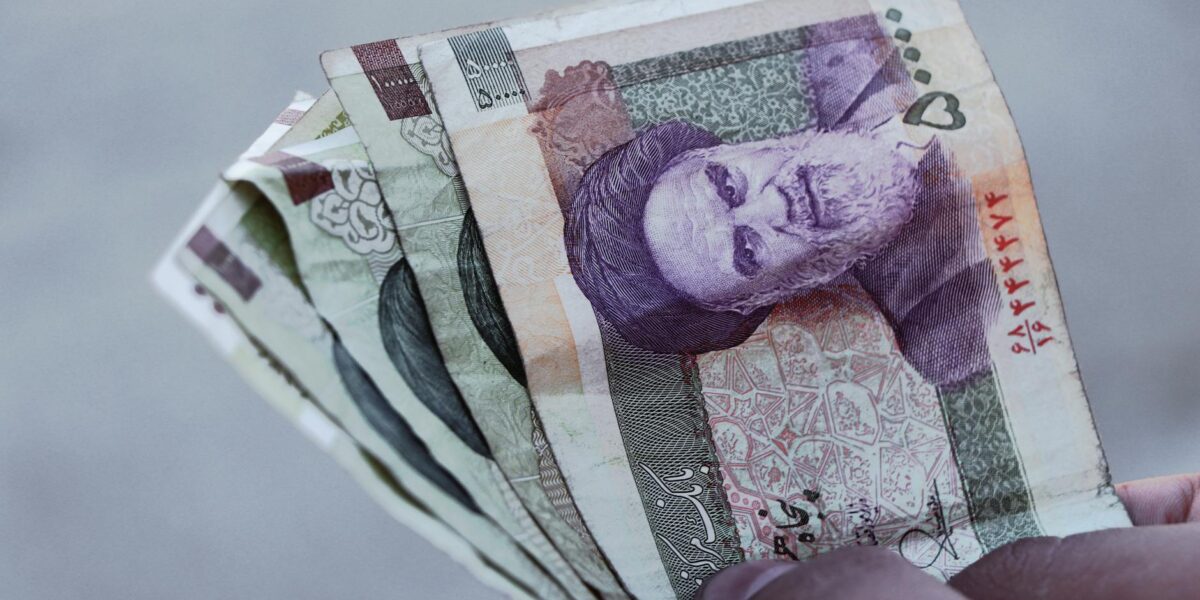
The Indian Rupee breached a fresh record low against the US Dollar on Tuesday, closing at its weakest level yet as elevated crude oil prices and escalating US-Iran tensions rattled investor sentiment. The Reserve Bank of India was forced to intervene in currency markets today to prevent steeper losses, deploying dollar reserves to stabilize the domestic unit as India's import bill climbed sharply.
The Rupee's slide comes at a critical juncture for Asia's third-largest economy, which relies heavily on imported crude oil to meet roughly 85 percent of its energy needs. With Brent crude prices elevated due to geopolitical uncertainty in the Middle East, India faces a widening trade deficit that has amplified demand for dollars from importers. The RBI's intervention signals growing concern that unchecked currency depreciation could fuel inflation and derail consumer spending just as domestic economic momentum shows signs of stabilizing.
India's vulnerability to external shocks remains acute despite years of economic reforms. The country imported merchandise worth over $650 billion in the previous fiscal year, with energy, electronics, and precious metals accounting for the bulk of purchases. Any sustained weakness in the Rupee translates directly into higher costs for businesses and consumers, potentially forcing the central bank to recalibrate its monetary policy stance.
What Happened
The Rupee's decline accelerated through Tuesday's trading session as traders absorbed news of renewed hostilities between the United States and Iran. While specific details of the conflict remain fluid, the mere prospect of supply disruptions in the Strait of Hormuz—a critical chokepoint through which roughly 20 percent of global oil supply flows—has been enough to push crude oil prices higher and trigger a flight to safety among investors.
The US Dollar has strengthened broadly against emerging market currencies as risk aversion gripped global markets. However, India's exposure is particularly pronounced given its import dependency. Oil marketing companies have ramped up dollar purchases to secure crude shipments, adding to the demand pressure on the Rupee. Foreign portfolio investors, who had been cautiously returning to Indian equities in recent months, appear to have paused fresh allocations pending clarity on both the geopolitical situation and the domestic inflation trajectory.
The Reserve Bank of India's intervention through state-run banks became evident in afternoon trading when the Rupee's fall slowed noticeably. Central bank dollar sales are designed to smooth volatility rather than defend any particular exchange rate level, but the timing suggests policymakers are concerned about the pace of depreciation. The RBI's foreign exchange reserves, while still substantial, have declined modestly in recent weeks after a period of accumulation.
Currency dealers reported heightened activity from corporate treasurers looking to hedge near-term dollar liabilities. Manufacturing firms with significant imported input costs have been particularly active, seeking to lock in forward rates before further Rupee weakness materializes. This hedging demand itself can create a self-reinforcing cycle where expectations of depreciation drive additional dollar buying.
Why It Matters For Professionals
For finance and treasury professionals managing corporate balance sheets, the Rupee's weakness presents immediate challenges. Companies with unhedged dollar debt face rising repayment costs in Rupee terms, potentially squeezing profit margins. This is especially acute for sectors like aviation, pharmaceuticals, and technology that carry substantial foreign currency exposure. Chief financial officers will need to reassess hedging strategies and potentially accelerate forward cover purchases, even though the cost of such protection has increased alongside the Rupee's decline.
Investors holding Indian assets denominated in Rupees have seen the dollar value of their holdings erode. For global fund managers benchmarking returns in hard currency terms, this creates a performance drag that may prompt portfolio rebalancing. However, the depreciation also makes Indian exports more competitive globally, which could benefit sectors like information technology services, textiles, and certain manufactured goods. Professionals in export-oriented industries may find demand conditions improving even as their domestic purchasing power for imported goods diminishes.
The inflation implications matter profoundly for salaried professionals and business owners alike. A weaker Rupee makes imported goods more expensive, from consumer electronics to industrial machinery. More critically, higher crude oil prices flow through to transportation costs, affecting everything from food prices to logistics expenses. If inflation accelerates beyond the Reserve Bank's comfort zone of 2 to 6 percent, interest rate cuts that professionals and businesses have been anticipating may be delayed or reversed entirely, keeping borrowing costs elevated for longer.
Portfolio strategists need to consider currency volatility as a distinct risk factor. The traditional assumption that Indian equity returns will compensate for currency depreciation may not hold if global risk sentiment deteriorates further. Diversification across geographies and asset classes becomes more important in an environment where currency swings can erase gains from underlying investments. Professionals managing family offices or high-net-worth portfolios should review their dollar allocation and consider whether current exposures adequately hedge against further Rupee weakness.
What This Means For You
If you are planning significant purchases of imported goods or foreign travel in the coming months, expect to pay more in Rupee terms. Consumer electronics, automobiles with high import content, and overseas education expenses will all become costlier. For those with commitments like tuition fees or property purchases abroad, consider whether locking in current exchange rates through forward contracts makes sense, even if the Rupee has already weakened substantially.
Professionals with the flexibility to accelerate dollar earnings or defer dollar expenses should evaluate their options carefully. Freelancers and consultants billing international clients in dollars are seeing improved Rupee realizations, which could make this an opportune moment to negotiate longer-term contracts. Conversely, if you have planned international training programs or conferences, the cost-benefit calculation may have shifted unfavorably.
What Happens Next
The Rupee's near-term trajectory depends heavily on crude oil price movements and the evolution of US-Iran tensions. If the geopolitical situation stabilizes and oil prices retreat from current levels, pressure on the Rupee should ease. However, structural factors like India's persistent current account deficit mean the currency faces a depreciation bias over the medium term, absent significant improvements in export competitiveness or reductions in gold and oil imports.
The Reserve Bank of India faces difficult trade-offs. Aggressive intervention to support the Rupee depletes foreign exchange reserves that serve as a crucial buffer against external shocks. Yet allowing the currency to fall too rapidly risks importing inflation and unsettling financial markets. Expect the central bank to continue measured interventions aimed at preventing disorderly moves rather than targeting any specific exchange rate level. The RBI's next monetary policy meeting will be closely watched for signals about how policymakers are balancing currency stability against growth and inflation objectives.
Market participants will monitor weekly foreign exchange reserve data for clues about intervention intensity. A sharp drawdown would suggest the RBI is defending the Rupee more vigorously, while modest declines would indicate a tolerance for gradual depreciation. Corporate earnings calls in coming weeks should provide insight into how businesses are managing currency risk and whether they are building additional import cost pressures into their pricing strategies, which would signal higher inflation ahead.
3 Frequently Asked Questions
Will the Rupee's weakness lead to higher interest rates?
Not immediately, but the risk is rising. If Rupee depreciation drives inflation above the RBI's 6 percent upper tolerance limit, the central bank may be forced to delay anticipated rate cuts or even consider tightening monetary policy. The decision will depend on whether inflation pressures prove temporary or become entrenched in wage and price-setting behavior.
Should I convert my savings to dollars now to protect against further Rupee decline?
For most individuals, wholesale currency conversion is not advisable. The Rupee has already depreciated significantly, and timing currency markets is notoriously difficult. Instead, focus on whether you have genuine dollar liabilities or expenses in the next 6 to 12 months that warrant hedging. Maintaining diversified savings across assets and currencies based on your actual needs is more prudent than speculating on exchange rate movements.
How does Rupee depreciation affect my mutual fund and stock investments?
The impact varies by sector. Companies with significant dollar revenues or export orientation may benefit from Rupee weakness as their products become more competitive globally. Conversely, businesses reliant on imported raw materials face margin pressure unless they can pass costs to customers. IT services, pharmaceuticals with API imports, and airlines are sectors where currency movements have outsized effects. Review your portfolio's currency exposure and sector allocation accordingly.
The market is wrong about this. Everyone is fixating on the exchange rate number, but the real story is whether India can use this moment to finally address its structural import dependency.
If you are a CFO or treasury head, stop waiting for the Rupee to recover and lock in forward cover for at least 50 percent of your next two quarters’ dollar exposure today. The option premium looks expensive now, but it will look cheap if US-Iran tensions escalate further. Do not make the mistake of thinking the RBI can indefinitely hold the line—their reserves are large but finite, and they will prioritize fighting inflation over defending any particular exchange rate.
For portfolio managers and serious investors, increase your allocation to exporters and companies with natural currency hedges. Look specifically at IT services firms and pharmaceutical companies with strong branded formulations businesses in regulated markets. They will see earnings expansion from Rupee depreciation while their import costs remain manageable.
This is also the moment for policymakers to accelerate domestic manufacturing incentives in electronics and clean energy equipment where India’s import bill is ballooning. Currency weakness is a symptom; import dependency is the disease.

[…] Steel is positioning for margin expansion in fiscal year 2027, banking on a combination of rising domestic steel prices, volume growth in India, and sustained cost-cutting initiatives to offset […]
[…] which imports approximately 85 percent of its crude oil requirements, remains acutely sensitive to Middle Eastern […]