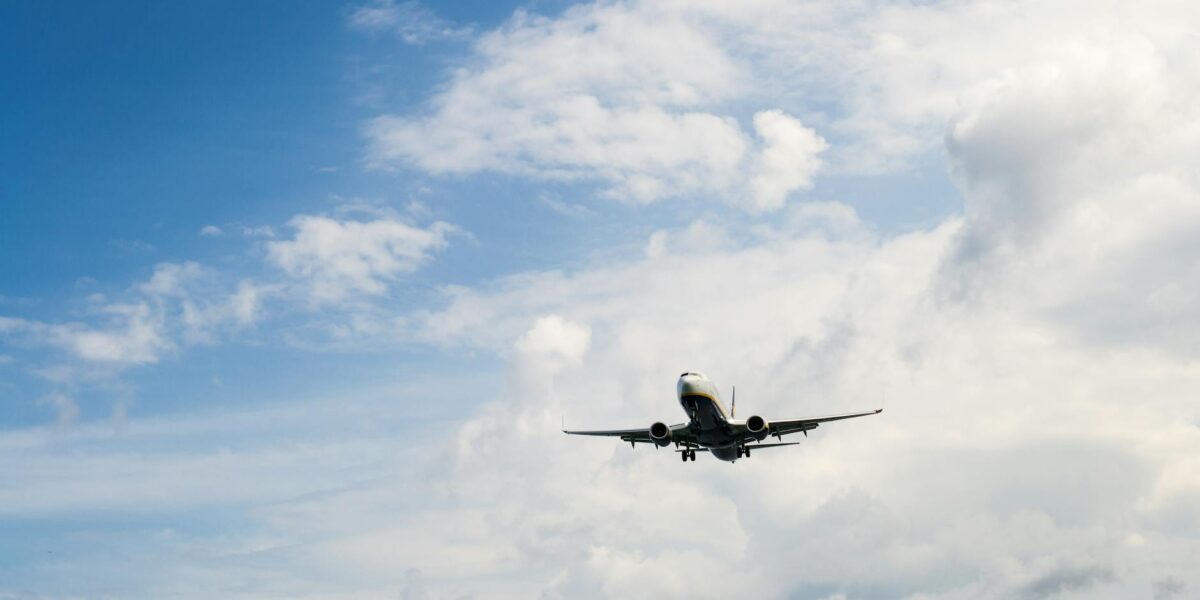
China has officially confirmed it will purchase 200 commercial aircraft from Boeing, validating President Donald Trump's announcement made in the aftermath of last week's bilateral summit. The deal marks the largest single order of American-made planes by Beijing since 2017, signaling a potential thaw in trade relations between the world's two largest economies after years of escalating tariffs and diplomatic friction.
The confirmation from China's National Development and Reform Commission came three days after Trump revealed the agreement during a press conference at the White House, where he described it as "the greatest deal in aviation history." While Boeing has not disclosed the financial value of the transaction, industry analysts estimate the order could be worth approximately $24 billion at list prices, though airlines typically negotiate substantial discounts on bulk purchases. The aircraft are expected to include a mix of 737 MAX and 787 Dreamliner models, with deliveries scheduled to begin in late 2026 and extend through 2030.
What Happened
The deal emerged from high-level negotiations that took place during a two-day summit between President Trump and Chinese President Xi Jinping at Camp David. The talks, which were originally scheduled to focus primarily on semiconductor export controls and military activities in the South China Sea, expanded to include commercial aviation after Boeing executives were reportedly invited to participate in parallel business discussions.
China had effectively frozen new orders from Boeing since 2021, instead directing its state-owned airlines toward European manufacturer Airbus and accelerating development of its domestic Commercial Aircraft Corporation of China (COMAC). The freeze came amid broader trade tensions and safety concerns following two fatal crashes of the 737 MAX in 2018 and 2019. Chinese regulators were among the last to recertify the aircraft for passenger service, only doing so in early 2023.
The 200-aircraft order will be distributed among China's three major state-owned carriers: Air China, China Eastern Airlines, and China Southern Airlines. According to statements from the carriers, the new planes will support fleet expansion as passenger traffic in China continues recovering and growing beyond pre-pandemic levels. Domestic air travel in China has surged 23 percent year-over-year in 2026, while international routes are now operating at 94 percent of 2019 capacity.
Why It Matters For Professionals
For investors and business professionals tracking US-China relations, this deal represents far more than an aviation purchase. It serves as a barometer for the broader economic relationship between Washington and Beijing at a moment when many analysts had expected continued decoupling. The willingness of China to make such a substantial commitment to an American manufacturer suggests both sides are seeking areas of commercial cooperation even as strategic competition intensifies in technology and defense sectors.
Boeing's stock rose 6.8 percent in morning trading following China's confirmation, adding approximately $11 billion to the company's market capitalization. The aerospace giant has struggled with production delays, quality control issues, and intense competition from Airbus over the past five years. This order provides critical visibility into Boeing's production schedule and revenue pipeline through the end of the decade. For Boeing's extensive supplier network, which includes hundreds of component manufacturers across 17 US states, the order translates to sustained demand and potential hiring in advanced manufacturing sectors.
The timing also matters for currency and commodity markets. A deal of this magnitude requires complex financing arrangements, typically involving a combination of export credit agencies, commercial banks, and potentially sovereign wealth funds. The structure of payment flows between Chinese entities and Boeing will influence dollar-yuan dynamics over the multi-year delivery schedule. Additionally, aerospace manufacturing is aluminum-intensive, and this order adds to demand forecasts for the metal, which had already been rising due to defense spending increases across NATO countries.
What This Means For You
If you hold positions in aerospace and defense stocks, this development validates the thesis that commercial aviation demand remains robust despite earlier concerns about oversupply and recession risks. The order also reduces Boeing's customer concentration risk, which had become heavily skewed toward North American and Middle Eastern carriers. Geographic diversification of the order book typically commands a premium valuation from institutional investors.
For professionals in supply chain and logistics sectors, the restart of major US-China aviation deals indicates that complete decoupling remains unlikely in capital-intensive industries where both countries have deep interdependencies. Companies that positioned themselves for total separation may need to recalibrate strategies to account for selective re-engagement in commercial sectors. This creates opportunities for businesses that maintained relationships and certifications in both markets rather than choosing sides definitively.
What Happens Next
The immediate focus shifts to contract finalization and financing arrangements. While China has confirmed the purchase, the formal contracts must still be signed between Boeing and the individual airlines. This process typically takes between 45 and 90 days and includes detailed specifications for cabin configurations, engine selection, and delivery schedules. Any significant delay in signing would raise questions about the durability of the political agreement.
Delivery timelines will be closely watched by industry observers. Boeing's production rate for the 737 MAX currently stands at 38 aircraft per month, below the company's stated goal of 50 per month by year-end 2026. Fulfilling the China order while meeting commitments to other customers will require Boeing to achieve and maintain these higher production rates without compromising quality. Any production stumbles would not only affect Boeing's financials but could also strain the renewed commercial relationship with Beijing.
Additionally, aerospace analysts will monitor whether this deal opens the door for further orders. China's commercial aviation fleet is projected to double by 2040, requiring approximately 9,000 new aircraft according to Boeing's own market forecasts. If this 200-plane order proves to be an isolated political gesture rather than the beginning of sustained purchasing, the strategic implications would be quite different. The next six months should provide clarity as Chinese airlines approach their regular order cycles for 2027 deliveries.
3 Frequently Asked Questions
Does this deal mean US-China trade tensions are over?
No. This represents selective cooperation in commercial aviation, but tensions remain intense in semiconductors, artificial intelligence, electric vehicles, and military technology. The US continues to maintain tariffs on hundreds of billions of dollars worth of Chinese goods, and China has retaliatory measures in place. Aviation was chosen for this deal partly because it is less strategically sensitive than emerging technologies.
Why would China buy from Boeing when it is developing its own commercial aircraft?
China's domestic manufacturer COMAC has made progress with its C919 narrowbody aircraft, but the plane has limited international certification and is not yet produced in sufficient quantities to meet demand from China's rapidly growing aviation market. Chinese airlines need proven, fuel-efficient aircraft now, and Boeing's 737 MAX and 787 Dreamliner remain among the most operationally efficient options. Buying from Boeing also serves diplomatic purposes by offering Trump a concrete win he can present to American manufacturing constituencies.
Should investors buy Boeing stock based on this news?
The stock has already gained nearly 7 percent on the news, pricing in much of the immediate positive impact. The more important question is execution. Boeing must deliver these aircraft on schedule without quality issues while also resolving ongoing production challenges. Investors should watch quarterly delivery numbers, supplier performance, and whether China follows through with additional orders before making long-term allocation decisions based solely on this announcement.
This is not really an aviation story. This is a story about what happens when both superpowers realize complete decoupling costs too much.
Trump needs a manufacturing win he can point to in battleground states where Boeing suppliers operate. Xi needs aircraft to support domestic consumption growth, which remains the weakest part of China’s economic recovery. Both got what they needed, so they made the deal. The interesting part is what they are still fighting about—semiconductors, rare earths, AI computing infrastructure. Those fights continue because the strategic stakes are existential.
If you are invested in US-China decoupling as a long-term theme, you need to become more selective. Total separation is not happening. Selective separation in strategic technology sectors is absolutely happening. Know the difference. Sectors where both sides have mutual commercial interest and limited national security concern—commercial aviation, certain pharmaceuticals, some agricultural products—will see pragmatic deals. Everything else becomes more restricted, not less.
Watch Boeing’s delivery schedule over the next six months. If they start missing timelines or having quality problems with China-bound aircraft, this whole diplomatic reset becomes fragile very quickly. Execution matters more than announcements.

[…] the multiplier effects of high-speed rail infrastructure. Global evidence from Japan, France, and China demonstrates that bullet train connectivity tends to accelerate property development, attract […]