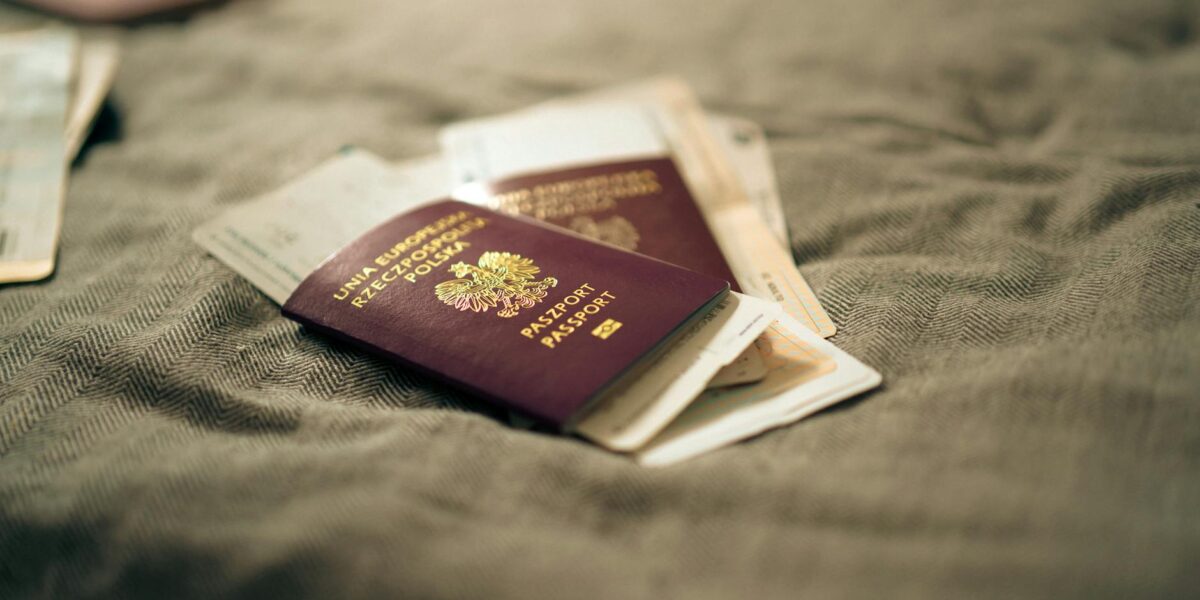
In a carefully choreographed but notably tense joint press conference, US Secretary of State Marco Rubio and India's External Affairs Minister S. Jaishankar addressed mounting friction between Washington and New Delhi over visa processing delays, alleged anti-India discrimination, and broader geopolitical realignment. The meeting, held in Washington on May 22, 2026, marked the first high-level diplomatic engagement following weeks of public criticism from both nations on consular operations and reported incidents targeting Indian nationals and professionals.
The conference revealed significant cracks in what has been positioned as a strategic partnership, with both ministers offering carefully worded acknowledgements of grievances while stopping short of concrete commitments on immediate resolution. Rubio confirmed that the State Department is reviewing visa processing protocols affecting Indian nationals and skilled professionals, while Jaishankar directly referenced "documented cases of discrimination" against Indians in the United States, signaling that New Delhi's patience on the issue has worn thin.
What Happened
The joint press conference was convened against the backdrop of escalating complaints from Indian diaspora organizations, tech companies, and government officials about systematic delays in H-1B visa processing, alleged disparate treatment at US consulates in India, and reports of racial profiling incidents targeting Indian professionals. Over the past eight months, processing times for employment-based visas at the US Embassy in New Delhi and the Consulate General in Mumbai had stretched to 180+ days, compared to 45-60 days for other nationalities, according to data compiled by Indian American advocacy groups.
More provocatively, Jaishankar raised the issue of what he termed "targeted discrimination" against Indian nationals, referencing specific incidents where Indian professionals reported being singled out for additional security screening, questioned about their employment credentials despite documentary evidence, and subjected to questioning protocols notably different from applicants from other nations. He did not name individual cases but made clear that New Delhi had compiled a dossier of complaints and presented them to the State Department before the conference.
Rubio acknowledged the concerns without accepting culpability. He framed the delays as a consequence of staffing shortages at US diplomatic missions in India, increased security protocols following global terrorism concerns, and an overall surge in visa applications worldwide. "We are committed to processing applications fairly and expeditiously," Rubio stated, adding that the State Department would "review its procedures to ensure they meet our standards of equal treatment." However, he stopped short of apologizing or committing to specific timelines for resolution.
The most striking moment came when Jaishankar directly named anti-India sentiment as a factor. "There have been instances where Indian professionals, particularly in technology sectors, have reported being treated with suspicion or hostility that goes beyond standard security protocols," he said, without elaborating further. This marked a rare diplomatic moment where India's government explicitly raised the issue of racism in a bilateral forum with the United States, signaling that the issue has escalated from private channels to public diplomacy.
Why It Matters For Professionals
For Indian technology professionals, consultants, and skilled workers seeking employment-based visas to the United States, the implications are immediate and material. The visa delays have already begun to reshape hiring patterns. Major US technology companies that historically relied on H-1B visa sponsorship have begun shifting recruitment priorities, either recruiting more extensively from US universities or accelerating remote work arrangements that allow Indian professionals to work for US companies without relocation.
This shift has real consequences for career trajectories. Indian professionals who had planned US relocation as part of their five-year career development are now facing uncertain timelines. Some companies have introduced internal visa sponsorship lotteries, where only a portion of candidates can be processed through the visa system, forcing professionals to compete for limited slots. Others have begun offering premium salaries to compensate for visa uncertainty—a hidden cost that ultimately benefits neither the professional nor the employer.
For businesses operating across the India-US corridor, the visa delays represent a genuine operational headache. Companies managing distributed teams across both nations face complications in sending technical experts, project managers, and client-facing professionals to the United States for training, client meetings, or project implementation. A software services company that typically cycles 30-40 engineers annually between Indian offices and US client sites has now had to revise that number to 15-20, disrupting project continuity and client relationships.
The broader geopolitical angle should not be ignored. India-US technology collaboration underpins significant components of the broader strategic partnership. If visa processing becomes a bottleneck, companies will diversify their dependency away from the United States. This pushes capital and talent toward Singapore, Canada, and other jurisdictions, ultimately weakening the technology ecosystem that both nations benefit from. Rubio's acknowledgement of the issue suggests that the State Department understands this risk, even if the current administrative machinery has not yet responded at scale.
What This Means For You
If you are an Indian professional with a pending US visa application, the immediate message from this press conference is clear: delays will likely persist for another 6-12 months, even with State Department commitments to review procedures. The bureaucratic machinery of the US consular system does not move quickly. Jaishankar's public pressure may accelerate some cases, but it will not create overnight systemic change. Plan accordingly. If your relocation timeline is flexible, consider delaying your application or exploring alternative pathways such as L-1 visas (intra-company transfer) if your employer operates in the United States, or seeking roles that allow remote work from India.
If you work in a company that depends on US visa sponsorship for talent acquisition, your HR team should immediately begin developing contingency plans. This might include accelerating hiring from US universities, expanding remote-first team structures, or identifying roles that do not require US presence. Companies that are slowest to adapt to this new reality will find themselves at a talent disadvantage within 12-18 months.
For investors monitoring India-US technology partnerships, this press conference signals that geopolitical friction is beginning to affect commercial operations in tangible ways. Watch for earnings calls where technology services companies disclose slowing US hiring or shifted talent allocation strategies. These will be early indicators of how deeply visa delays are affecting business.
What Happens Next
The State Department is expected to issue a formal statement within two weeks detailing its procedural review. However, do not expect dramatic changes in actual visa processing timelines before late 2026 or early 2027. Bureaucratic reviews move slowly, and any new protocols must first be piloted, then rolled out across consulates in India. The Mumbai and New Delhi consulates will likely be the testing grounds, given their volume and political sensitivity.
More importantly, watch for private diplomatic conversations between the two governments. Jaishankar's public pressure suggests that India is considering escalatory measures—potential tit-for-tat visa restrictions on US nationals or diplomats, or formal complaints to the World Trade Organization regarding restrictions on services professionals. Neither outcome is likely in the immediate term, but both remain on the table if the State Department is perceived as moving too slowly on this issue.
The issue will almost certainly be revisited during the next India-US bilateral dialogue, likely scheduled for September 2026. By then, we will have concrete data on whether visa processing times have actually improved or whether this press conference was merely theater masking continued bureaucratic inertia.
3 Frequently Asked Questions
Will this press conference actually lead to faster visa processing?
A: Unlikely in the short term. Jaishankar's public pressure may accelerate individual cases and signal to the State Department that this issue has become politically sensitive in India. However, the underlying causes—staffing shortages, security protocols, and global visa volume surges—require structural solutions, not diplomatic interventions. Expect modest improvements (perhaps 20-30% faster processing) by Q4 2026, not dramatic change.
Are US companies aware of these visa delays, and how are they responding?
A: Major technology companies are acutely aware and have already begun adjusting hiring strategies. Companies like Accenture, Cognizant, and Infosys have publicly acknowledged that US visa uncertainty is affecting their talent pipeline. Some have increased salaries for US-based roles to compensate for visa risk. Others are expanding remote work arrangements, which reduces the need for visa sponsorship. This is already reflected in hiring announcements and earnings guidance, though most companies avoid naming visa delays explicitly.
Could this dispute escalate into a broader trade or geopolitical conflict?
A: Unlikely to escalate dramatically, but the risk is real. India has historically responded to perceived unfair treatment through quiet retaliation—tightening visa processes for US nationals, imposing trade restrictions on specific sectors, or withholding cooperation on intelligence matters. None of these are currently on the table, but if the State Department is perceived as dismissing India's concerns, escalation becomes more probable. The diplomatic temperature will be closely watched by India watchers over the next 90 days.
The real story here is not about individual visa delays—it is about a shifting power dynamic between India and the United States. For years, India has accepted suboptimal treatment in bilateral relationships because the strategic asymmetry was so stark. That is changing. India’s economy is growing, its technology sector is undeniable, and its geopolitical leverage is rising. Jaishankar’s explicit mention of discrimination signals that India is no longer willing to absorb slights quietly. The State Department clearly got the message.
Here is what matters: First, if you are a hiring manager at a US company, stop assuming you can fill positions through H-1B sponsorship. Build a hiring strategy that assumes visa delays and uncertainty. Second, if you are an investor in India-focused technology services companies, watch for any commentary about slowing US hiring in the next earnings cycle. This will be the earliest signal of how material this issue is becoming. Third, monitor India-US bilateral statements over the next 90 days. If the tone hardens or if India begins making counter-offers to US professionals (e.g., streamlined visa processes for reverse flows), then you know this dispute is escalating beyond consular operations into genuine strategic friction.
