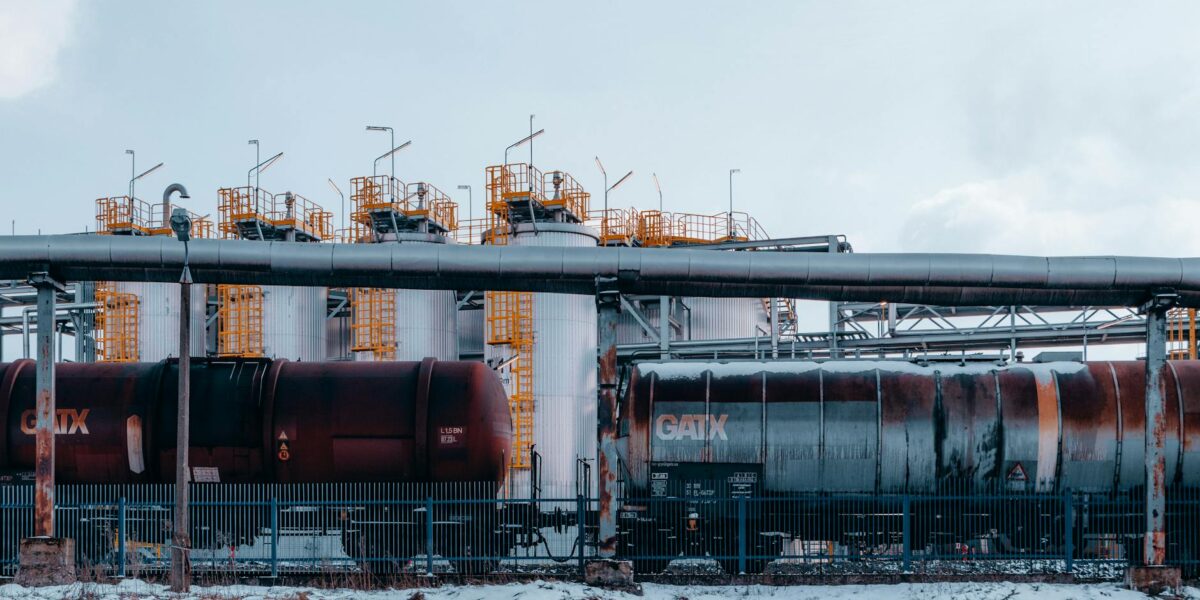
The Centre has confirmed that fuel stocks remain adequate across the country, with no immediate supply concerns on the horizon. This assurance comes as India maintains its position as the world's fourth-largest refining hub, with a combined refining capacity exceeding 258 million tonnes per annum—a critical infrastructure advantage that underpins energy security for 1.4 billion people.
The government has also signalled that liquefied petroleum gas (LPG) supply will be prioritised in the coming months, addressing household energy needs even as global crude prices remain volatile. This dual focus on petroleum products and cooking gas reflects New Delhi's strategy to balance industrial growth with affordability for ordinary Indian families.
What Happened
India's refining sector has become a cornerstone of domestic energy independence. With 258 million tonnes of annual refining capacity, India processes crude oil sourced both domestically and internationally, converting it into petrol, diesel, jet fuel, and other petroleum products. This capacity is distributed across major refineries operated by Indian Oil Corporation (IOC), Hindustan Petroleum Corporation Limited (HPCL), Bharat Petroleum Corporation Limited (BPCL), and private players like Reliance Industries, among others.
The government's recent statement emphasizing fuel adequacy suggests that current inventory levels are comfortable relative to domestic demand. India's petroleum consumption has been rising steadily as economic activity accelerates and vehicle ownership increases—particularly in urban centres. Yet the Centre's confirmation indicates that refining output and imports are meeting this growing demand without creating bottlenecks or shortages.
The specific focus on LPG prioritisation is significant because cooking gas is not merely a luxury but a necessity for approximately 430 million Indian households now covered under the Pradhan Mantri Ujjwala Yojana (PMUY). Any supply disruption in LPG would directly affect household budgets and inflation metrics that the Reserve Bank of India monitors closely. By ringfencing LPG supply, the government is protecting consumers from price shocks in a product essential for daily living.
Why India Should Care
India's refining capacity tells a story about economic self-reliance that matters deeply to investors and professionals tracking India economy news today. A decade ago, India was far more dependent on refined petroleum imports. Today, domestic refineries handle the majority of the country's needs, reducing forex outflows and insulating the rupee from crude price volatility. This structural shift has strengthened the country's current account and reduced external vulnerability—a key metric that rating agencies and foreign investors watch.
For the common Indian household, adequate fuel stocks translate to stable petrol and diesel prices at the pump. Historically, fuel price spikes have triggered cascading inflation in transport costs, food prices, and logistics expenses. The Centre's assurance today suggests that neither petrol nor diesel price hikes are imminent due to supply shortages. This matters for everyone—from the cab driver paying for fuel daily to the homemaker budgeting for monthly expenses. Stable fuel prices reduce inflationary pressure across the economy.
For Indian businesses and investors, fuel security is equally critical. Manufacturing sectors dependent on diesel for power generation, logistics companies reliant on steady fuel costs, and sectors like aviation and shipping all benefit from supply certainty. When fuel supply is assured, businesses can plan capital expenditure, pricing, and expansion strategies with greater confidence. This reduces economic friction and supports India economy news today in terms of growth projections and earnings stability for listed companies.
What This Means For You
If you are an urban professional managing household expenses, the government's fuel adequacy statement should ease concerns about sudden petrol or diesel price jumps in the near term. Your transportation costs—whether for personal vehicles or ride-sharing—are unlikely to spike due to supply shortages. However, remain watchful of global crude prices, which can still move based on geopolitical factors unrelated to domestic supply.
If you are an investor, the message is that energy sector stability supports broader economic growth. Companies in logistics, automotive, and transportation should face fewer margin pressures from fuel cost inflation. Energy stocks themselves—particularly refining companies—benefit from adequate capacity utilisation and steady demand. The focus on LPG supply also indicates government intent to maintain affordability and social stability, reducing policy risk in the energy space.
For salaried professionals and small business owners, this translates to predictability. When fuel supply is adequate and the government is actively managing LPG affordability, you can budget household expenses with greater confidence. Inflation expectations moderate, purchasing power remains more stable, and the overall economic environment becomes less uncertain—factors that influence everything from job market confidence to investment decisions.
What Happens Next
The immediate outlook is stable. India's refining sector will continue operating at high utilisation rates, processing crude oil into finished products that meet domestic demand and support some export volume. The Centre's prioritisation of LPG suggests heightened attention to cooking gas availability through summer months, when demand typically softens slightly, building inventory buffers for potential demand spikes.
Over the medium term, watch for capacity additions. Several refineries have expansion projects underway, and India's refining capacity is expected to grow toward 300 million tonnes per annum by 2030. This would further entrench India's position as a global refining powerhouse and provide additional security against supply shocks. Additionally, monitor crude oil sourcing strategies. India sources from the Middle East, Russia, and Africa, and geopolitical shifts in any region could influence import costs and logistics, even if refining capacity remains constant.
258 million tonnes of refining capacity sounds impressive until you realise India is still importing 85% of its crude oil. We have built world-class refineries but we remain vulnerable to OPEC decisions and Middle East tensions—neither of which we control. The government’s assurance on fuel stocks is credible and should stabilise prices near-term, but this masks a deeper energy independence challenge that won’t be solved by refining capacity alone.
If you hold energy stocks or logistics-heavy portfolios, this statement is positive—it reduces near-term margin compression from fuel inflation. But if you’re thinking about India economy news today and beyond, the real move is to watch renewable energy capacity and electric vehicle adoption. That’s where India’s true energy autonomy lies. Don’t get comfortable with refining headlines. The real transition is happening in sectors the news isn’t covering yet. Track renewable energy stocks, EV infrastructure plays, and companies building battery supply chains—those are the 258 million tonne decisions of 2030.
