The International Monetary Fund's First Deputy Managing Director Gita Gopinath has directly attributed India's revised GDP growth projections to geopolitical instability stemming from the Iran war and resulting oil price volatility. The acknowledgment marks one of the first times a senior IMF official has explicitly connected ongoing Middle Eastern conflicts to India's macroeconomic performance, even as the country maintains relatively robust growth numbers compared to global peers.
In January 2026, the IMF cited robust momentum and strong third-quarter performance to revise its India GDP estimate for FY26 to 7.3 percent, while projecting FY27 growth at 6.4 percent. Gopinath's recent comments provide crucial context to these numbers, suggesting that without the Iran war oil prices India has faced in recent months, growth projections could have been higher. The revision comes at a time when India's economy has otherwise shown resilience across manufacturing, services, and consumption indicators.
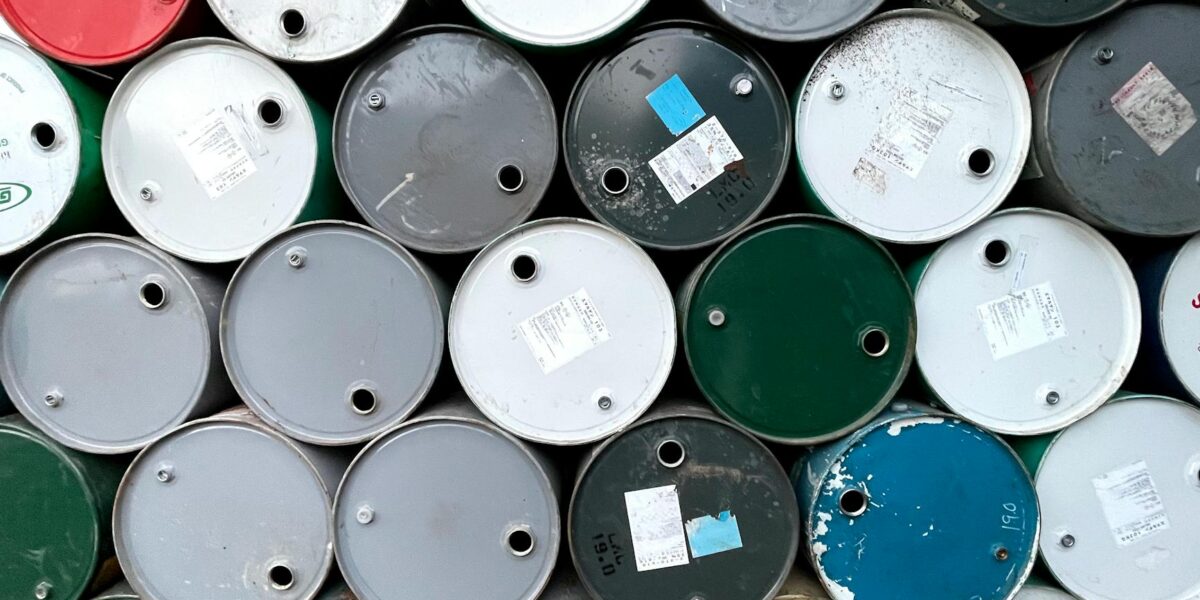
India imports nearly 85 percent of its crude oil requirements, making it acutely vulnerable to global energy price shocks. The escalating Iran war has disrupted oil supply chains through the Strait of Hormuz, through which nearly 21 million barrels of oil pass daily. For Indian consumers and businesses, this translates directly into higher input costs, elevated inflation, and squeezed household budgets.
What Happened
Gita Gopinath's statement comes as the IMF continues to monitor geopolitical risks that threaten global economic stability. The Iran war, which has intensified over the past several months, has created significant uncertainty in global energy markets. Oil prices have experienced sharp volatility, with Brent crude swinging between USD 78 and USD 95 per barrel since January 2026, creating planning challenges for oil-importing nations like India.
The IMF's January revision to India's growth forecast reflected a balancing act. On one hand, India's domestic economy showed strong third-quarter performance with healthy consumption patterns, improved manufacturing output, and steady services sector growth. On the other hand, external headwinds from the Iran war oil prices India has confronted have created inflationary pressures that threaten to dampen this momentum. The 7.3 percent growth rate for FY26, while impressive by global standards, represents a moderation from the growth rates India experienced in previous years.
Gopinath's acknowledgment is significant because it quantifies the external shock impact on India's growth trajectory. The IMF's modeling suggests that sustained oil price volatility could shave anywhere between 0.3 to 0.5 percentage points off India's GDP growth in the current fiscal year. This impact flows through multiple channels including higher transportation costs, increased manufacturing expenses, and reduced consumer purchasing power as fuel prices rise.
Why India Should Care
The connection between Iran war oil prices India faces and economic growth is not abstract—it shows up in monthly inflation data, fuel prices at petrol pumps, and corporate earnings reports. When oil prices spike due to Middle Eastern instability, India's import bill swells immediately. Higher oil imports widen the current account deficit, putting pressure on the rupee and making all other imports more expensive. This creates a cascading effect through the economy.
For Indian businesses, particularly in transportation, manufacturing, and chemicals, oil price volatility creates severe planning challenges. Companies cannot accurately forecast input costs, making it difficult to price products, plan capital expenditure, or commit to long-term contracts. This uncertainty often leads to delayed investments, which directly impacts job creation and economic expansion. The manufacturing sector, which the government has prioritized through initiatives like Make in India, becomes less competitive globally when energy costs rise unpredictably.
Indian households feel the impact most directly through retail fuel prices and overall inflation. When crude oil prices rise, petrol and diesel prices typically follow within weeks. This affects not just vehicle owners but everyone, as higher transportation costs get embedded in the prices of groceries, consumer goods, and services. The Reserve Bank of India faces a policy dilemma—raising interest rates to control inflation could further slow growth, while keeping rates low risks allowing inflation to spiral.
What This Means For You
If you are an investor, the Iran war oil prices India nexus should inform your portfolio decisions. Oil marketing companies face margin pressures during volatile periods, even as upstream oil and gas producers might benefit from higher prices. Defensive sectors like consumer staples and healthcare tend to outperform when oil shocks threaten growth. Consider rebalancing away from transportation and logistics stocks that face direct margin compression from fuel cost increases.
For salaried professionals and business owners, sustained oil price volatility means planning for higher costs across the board. If you are considering major purchases, particularly vehicles or anything involving significant transportation costs, factor in the possibility of elevated prices for the next 12-18 months. Businesses dependent on logistics should explore fuel hedging options or renegotiate contracts to include fuel adjustment clauses. The job market in oil-sensitive sectors may also see slower hiring, making it prudent to build emergency savings if you work in manufacturing, airlines, or logistics.
What Happens Next
The trajectory of India's GDP growth through the remainder of FY26 and into FY27 will depend significantly on how the Iran conflict evolves. If diplomatic efforts succeed in de-escalating tensions and reopening blocked supply routes, oil prices could stabilize in the USD 75-80 per barrel range, allowing India to achieve or even exceed the IMF's 7.3 percent projection. However, if hostilities intensify or expand to involve other Gulf nations, India could face an oil shock comparable to previous crises, potentially pushing growth below 7 percent.
The government has limited tools to cushion the blow. It can reduce excise duties on fuel to prevent retail price spikes, but this compromises tax revenues needed for infrastructure and social spending. India has also been building strategic petroleum reserves and diversifying oil import sources, but these measures provide only partial insulation. Watch for policy announcements around fuel subsidies, potential deals with Russia and other non-Gulf suppliers, and RBI monetary policy decisions in the coming months—these will signal how serious policymakers consider the oil price threat to be.
Here is what I think most people are missing about this story. Gopinath’s statement is not just an economic observation—it is a wake-up call about India’s structural vulnerability. We have built an economy growing at 7-plus percent while remaining 85 percent dependent on imported oil. That is like constructing a skyscraper on a foundation you do not control. Every time tensions flare in the Middle East, our growth story becomes hostage to events we cannot influence.
My view after analyzing the data: this is the moment to aggressively diversify energy sources. The government’s push toward electric vehicles and renewable energy is not just climate policy—it is national security and economic stability. For investors, this means the energy transition story in India is more urgent and more investable than most realize. Look at EV manufacturers, battery technology companies, and renewable energy producers not as ESG plays but as strategic hedges against oil vulnerability.
What this really means for your money in the next six months: expect volatility. The Iran war oil prices India correlation Gopinath identified will continue playing out in inflation data, RBI policy, and market movements. Build cash reserves now, avoid leveraged bets on oil-sensitive sectors, and if you have been considering solar panels for your home or office, the payback period just got shorter. The externalities from Iran are beyond our control, but how we position ourselves financially is entirely within it.
