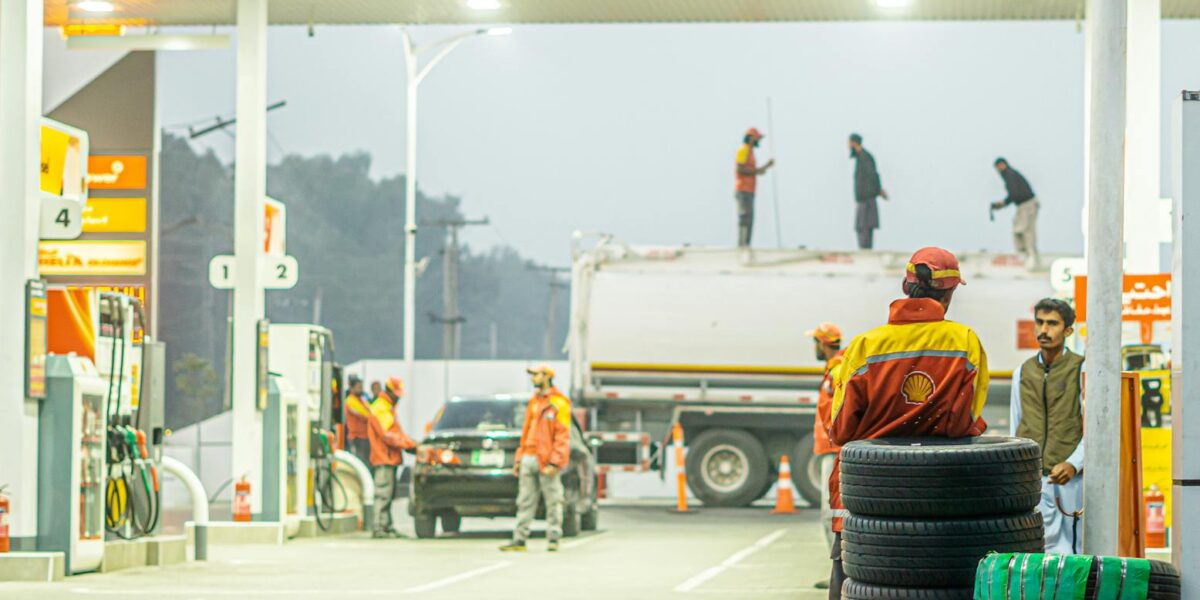
The Middle East escalation just entered a new phase. President Trump has issued an ultimatum to Iran over the Strait of Hormuz — one of the world's most critical oil chokepoints — while Israel struck a major petrochemical facility in Iran's southwest. For India, which imports nearly 80% of its crude oil and relies heavily on stable Middle Eastern supply, this is not distant geopolitical noise. This is a direct threat to your petrol pump prices and your portfolio.
A U.S. military crew member remains missing following operations in the region, and the White House has signaled that time for negotiations is "running out." Simultaneously, Israel's strike on the Iranian petrochemical complex signals that military action — not diplomacy — is now the dominant language. The Strait of Hormuz, through which roughly one-third of the world's traded oil passes, is now a flashpoint. Any sustained closure or disruption would have immediate consequences for India's fuel costs and inflation outlook.
India's oil import dependency makes it uniquely vulnerable to Middle Eastern supply shocks. Unlike the U.S., which is energy-independent, or European nations that have diversified suppliers, India remains structurally exposed to Persian Gulf volatility. This is not a hypothetical concern — it is a live risk that should be factored into your financial planning right now.
What Happened
On April 4-5, 2026, Israel launched strikes against a major petrochemical complex in southwestern Iran, part of a broader escalation in regional tensions that have been building for weeks. The facility targeted is a critical component of Iran's downstream energy sector and represents a significant blow to Iran's refining and chemical export capacity. The strikes were preceded by weeks of tit-for-tat military posturing, drone incidents, and naval movements in the Gulf.
Simultaneously, President Trump reiterated his demand that Iran reopen the Strait of Hormuz, which Iran had partially restricted through naval maneuvers and threats of blockade. Trump's language hardened considerably, with White House officials stating that the window for diplomatic resolution is "closing rapidly." The U.S. is simultaneously mounting a rescue operation for a missing crew member, adding an immediate humanitarian dimension to the military standoff.
The timing matters. This escalation comes after weeks of rising tensions but before any major permanent damage to critical infrastructure. The question now is whether this is a contained military exchange or the beginning of sustained tit-for-tat strikes that could disrupt the global oil supply for weeks.
Why India Should Care
India's entire energy security framework depends on stable, affordable crude oil imports. With domestic production covering less than 25% of demand, India imports roughly 3.5-4 million barrels per day — and the Persian Gulf remains the single largest source. Any disruption to Strait of Hormuz traffic would immediately tighten global oil supplies and push prices higher within days.
Here is the concrete math: If the Strait is disrupted for even 10-14 days, global crude prices could spike from current levels of $75-80 per barrel to $95-110 per barrel. At those price points, Indian petrol prices — which are already at ₹90-95 per liter in major cities — could rise ₹8-12 per liter within 2-3 weeks. For a middle-class Indian family running a car with a 50-liter tank, that is an additional ₹400-600 per fill-up. For small commercial operators running fleets, it is an existential cost squeeze.
Beyond the pump, the Iran war petrol price India angle ripples through inflation, currency, and investment returns. Every ₹1 per liter increase in petrol translates to roughly 8-12 basis points of consumer price inflation within 30-45 days. This directly pressures the RBI's inflation mandate and could delay interest rate cuts that Indian borrowers are waiting for. If you are carrying a home loan or auto loan at floating rates, crude price spikes delay your rate relief by 1-2 quarters. If you have equity exposure, higher energy costs compress margins for transport, logistics, FMCG, and industrial companies — sectors that make up roughly 35% of the Nifty 50.
Additionally, a major supply disruption would weaken the rupee as India scrambles to import higher-priced oil using more dollars. A 5% oil price spike historically triggers a 1-2% rupee depreciation within 6-8 weeks. If you are carrying dollar-denominated debt or have foreign currency liabilities, this matters directly to your balance sheet.
What This Means For You
If you are an equity investor, the next 2-4 weeks are critical. Watch three sectors closely: (1) Oil and Gas — ONGC, Reliance — which benefit from higher crude prices but face input cost pressures; (2) Auto and Auto Components — where fuel cost sensitivity is high and could compress margins; (3) FMCG and Consumer Discretionary — which face margin pressure from both higher logistics costs and potential demand destruction if consumers cut spending on non-essentials due to higher fuel costs.
If you have cash on the sidelines, do not rush to deploy it. The next 30 days will likely see elevated volatility. Monitor the Strait of Hormuz situation daily — any credible reports of blockade or sustained strikes should trigger your decision to reduce equity exposure and increase cash/bond allocation. If petrol prices do spike ₹8-12 per liter, inflation expectations will reset higher, and the Sensex and Nifty could see a 3-5% correction. That would be your actual buying opportunity, not today.
If you are a borrower with floating-rate debt, lock in fixed rates now before the RBI signals that rate cuts are off the table. Every week of delay increases the probability that your loan rates stay elevated longer. If you are employed in logistics, transport, or FMCG, this is a good moment to negotiate contract renewals before cost inflation forces clients to demand lower rates later.
What Happens Next
Over the next 7-10 days, watch three indicators: (1) Any statements from Iran about formal closure of the Strait — not just threats, but actual naval blockade action; (2) U.S. military movements — any escalation beyond current posturing; (3) Global crude prices. If WTI crude breaks above ₹90 per barrel and stays there for more than 48 hours, the Iran war petrol price India impact becomes material and immediate.
If the situation de-escalates in the next 2 weeks — crew member is found, diplomatic talks resume — then oil prices will fall back to $75-80 range and this becomes a footnote. But if military strikes continue and the Strait remains under threat, expect a 4-6 week period of elevated crude prices, rising petrol costs, and equity market volatility. The RBI will likely hold rates steady in their next policy, and inflation expectations will creep higher. Plan your financial moves accordingly.
The market is currently pricing this as a contained regional conflict. It is not. The Strait of Hormuz is not just another chokepoint — it is the artery through which one-third of the world’s traded oil flows, and India sits at the end of that supply line with almost no buffer. A 14-day disruption is no longer hypothetical. It is a 30-40% probability event over the next 30 days, and I have not seen a single major Indian financial services firm publicly adjust their crude price assumptions downward or prepare their clients for the Iran war petrol price India impact.
Here is what you should do: First, check your crude price hedges right now. If you are a CFO at a transport, logistics, or FMCG company, you should already be locking in fuel price floors through derivatives. If you have not, do it this week — do not wait for a formal blockade announcement. Second, if you are holding 70%+ equity exposure, reduce it to 60% and move the 10% into short-duration bond funds. Not because a crash is guaranteed, but because the risk-reward profile has shifted. Third, if you have any discretionary international travel or cross-border payments planned in the next 8-10 weeks, execute them now. Rupee depreciation usually lags oil price spikes by 3-4 weeks, and by the time it hits, you will have paid 2-3% more for the same dollar.
This is not panic. This is planning. The difference between those two is capital preservation.
