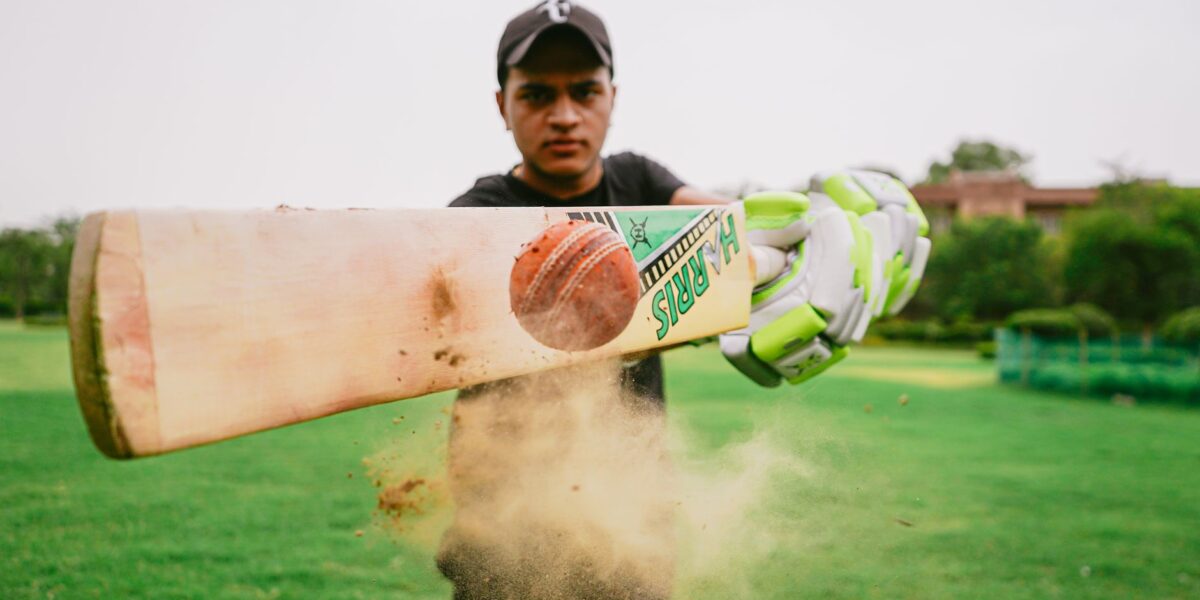
At 15 years and 356 days, Vaibhav Sooryavanshi became India's youngest international cricket debutant during the second T20I against England, scoring 14 off 10 balls with two sixes while offering senior batsman Abhishek Sharma tactical field observations that sparked viral social media attention. The moment—captured in an on-field exchange where Sooryavanshi confidently advised Sharma on pitch conditions—underscored a generational shift in how young talent approaches high-pressure international competition with composure that typically takes years to develop.
The exchange occurred during the second T20I at a venue where England toured India in early July 2026. Sooryavanshi's debut marked a historic milestone for Indian cricket, breaking the previous record for youngest international debutant while simultaneously demonstrating that age is no longer a barrier to performing under extreme pressure in franchise-driven, talent-accelerated cricket ecosystems.
What Happened
Vaibhav Sooryavanshi walked out to bat in India's second T20I against England carrying the weight of becoming the nation's youngest international debutant. Rather than displaying the hesitation or anxiety typical of teenage debuts on the global stage, Sooryavanshi approached the crease with calculated aggression. He scored 14 runs off just 10 balls, including two six-hit boundaries, establishing himself as an immediate threat despite England's experienced bowling attack.
The moment that captured global attention, however, came during a mid-innings discussion between Sooryavanshi and Abhishek Sharma, his senior batting partner. In what appears to have been tactical conversation about pitch conditions and field positioning, Sooryavanshi offered strategic counsel to Sharma. The exchange—reportedly captured as "Samne jayegi ki piche maaru?" (Should I hit it in front or behind?)—went viral across social media platforms within hours, with the video accumulating millions of views across X (formerly Twitter), Instagram, and YouTube.
The viral moment was significant not because of the comedic value of a teenager advising a senior player, but because it revealed something deeper about modern cricket development. Sooryavanshi's confidence in offering tactical feedback to an established international player suggested that talent development pathways—through franchise leagues, age-group tournaments, and intensive coaching systems—are producing players who arrive at the international stage with contextual understanding and field awareness that previously took years to accumulate.
Sharma's receptiveness to the advice, rather than defensive dismissal, indicated a professional culture shift where experience hierarchies are giving way to merit-based cricket intelligence. In international cricket, where margins between victory and defeat are measured in fractions of runs and seconds, tactical input from any competent observer carries weight regardless of age or seniority.
Why It Matters For Professionals
For investors and talent scouts monitoring cricket's commercial ecosystem, Sooryavanshi's debut and viral moment represent data points in a larger market trend: the acceleration of talent monetization timelines in cricket. Historically, cricket careers followed predictable arcs—domestic success at age 18-22, international selection at 23-26, peak earning potential at 28-35. This timeline created infrastructure around player development, sponsorship pipelines, and franchise acquisition patterns.
Sooryavanshi's debut at 15 with immediate international impact compresses this timeline. The commercial implications are immediate. Franchises in the Indian Premier League, Big Bash League, and other T20 competitions are now actively scouting players in the 14-16 age bracket, signaling that the monetization window for cricket talent has shifted backward by 5-8 years. Sponsorship agencies are re-evaluating their talent acquisition strategies. Performance-linked endorsement deals, previously targeting players with 3-5 international matches, are now being negotiated with teenage debutants.
For emerging market cricket nations competing with India, Australia, and England, Sooryavanshi's success raises the competitive threshold. Youth development programs will need to accelerate integration timelines, potentially increasing investment in junior cricket infrastructure. Countries unable to field competitive teenage players in international formats risk being priced out of the T20 revolution that dominates global cricket scheduling and broadcasting revenue.
The viral moment itself carries media value that extends beyond cricket. In an era where short-form video drives social media engagement and sponsorship metrics, moments like Sooryavanshi's on-field exchange with Sharma generate organic reach that paid advertising cannot replicate. Sports brands monitoring viral moments are already calculating the lifetime commercial value of players who generate such engagement while still in their debut match. This creates cascading pressure on franchise teams to develop not just cricket skills, but media-friendly player personas at increasingly younger ages.
What This Means For You
If you are a parent of a cricket-playing child, Sooryavanshi's breakthrough signals that elite pathway integration is accelerating. Age is no longer a limiting factor for international selection if a player demonstrates the required technical and tactical understanding. This means that investment in specialized coaching, strength conditioning, and mental performance at ages 12-14 now yields direct returns in franchise opportunities and international selection timelines. The window for building competitive advantage at young ages has genuinely compressed.
For cricket enthusiasts and casual sports investors, Sooryavanshi's moment illustrates why T20 cricket continues to dominate global investment despite traditional Test cricket's historical prestige. T20's compressed format and high-variance outcomes create opportunities for young talent to disrupt established hierarchies rapidly. If you are tracking cricket as an emerging media property or considering investment exposure to cricket franchises, understand that player talent cycles are shortening, which means franchise valuations are becoming increasingly dependent on youth development systems rather than purchased international stars.
What Happens Next
Sooryavanshi will face intense scrutiny in subsequent matches. The benchmark for his performance has now been set at debut level—teenage debutants who deliver immediate impact establish expectations for continued excellence. England's bowling attack will have analyzed his techniques, and future opponents will come prepared with specific strategies to neutralize his aggression. The real test lies in whether his composure translates across multiple matches, different opponents, and varying conditions.
Within the Indian cricket ecosystem, Sooryavanshi's success will trigger accelerated selection of other young talent. The national team management will face pressure to identify and debut additional teenage players if they demonstrate similar technical competency. This could fundamentally reshape India's squad composition in T20 cricket, where youth provides not just physical advantages but also lower salary expectations, longer career arcs, and greater media engagement.
International cricket boards are likely monitoring this development closely. If India continues successfully integrating teenage players into international competition, other nations will be compelled to follow similar pathways. This could eventually shift global cricket development models away from age-restricted junior categories toward earlier international integration, potentially disrupting established youth cricket structures globally within the next 18-24 months.
3 Frequently Asked Questions
Why is a 15-year-old's debut considered historically significant if child athletes have competed internationally in other sports?
A: Cricket's international structure historically required players to accumulate domestic experience, domestic first-class cricket, and consistent franchise success before international selection. The typical pathway took 8-10 years. Sooryavanshi's direct integration at 15 breaks this established system fundamentally. In sports like gymnastics or swimming, childhood prodigies integrate early because physical development plateaus by mid-teens. Cricket is unique because tactical understanding, opposition reading, and pressure experience were previously considered age-dependent factors. Sooryavanshi arriving with these skills at 15 suggests development systems have evolved to compress learning timelines, making his debut structurally unprecedented rather than merely statistically unusual.
Does the viral on-field exchange between Sooryavanshi and Sharma indicate he is genuinely tactically advanced, or was it simply captured at a convenient moment?
A: The exchange itself cannot definitively prove advanced tactical understanding without seeing the actual match context, field positioning, and subsequent outcomes of the suggested strategy. However, the fact that Sharma engaged seriously with the suggestion rather than dismissing it indicates at minimum that Sooryavanshi's observations were cricket-intelligent enough to be worth considering. In professional international cricket, senior players do not entertain tactical advice from junior partners unless it contains legitimate strategic value. The viral nature of the moment likely amplified its significance beyond what the actual exchange warranted, but it serves as a proxy indicator for broader observational competency that 15-year-olds developing through modern systems appear to be acquiring.
Will Sooryavanshi's success create pressure on other teenage players to debut at younger ages, potentially affecting youth cricket development?
A: Likely yes, within India's cricket ecosystem specifically. Success at the international level creates demonstration effects that cascade through talent development systems. Parents, coaches, and administrators will see Sooryavanshi's pathway as validation for accelerated development models. However, this could create a harmful bifurcation where elite young talent receives accelerated international exposure while broader youth cricket programs atrophy due to resource concentration. Other nations may face different pressures depending on their cricket infrastructure. Countries with established franchise systems (Australia, England) have infrastructure to accelerate youth integration. Countries without such systems may struggle to replicate India's pathway, potentially widening competitive gaps in global cricket over the next 5-10 years.
Why is no one talking about what Sooryavanshi’s debut actually reveals about cricket talent development compression? This is not a cricket story alone—it is a talent market story. We are watching real-time evidence that intensive coaching, franchise systems, and data-driven player development are fundamentally shortening the timeline between raw talent identification and international competition. Three concrete actions: First, if you are tracking cricket as a media property or investment, recognize that player valuations will increasingly favor teenage talent with demonstrated international performance because their career arcs are longer and their media engagement is higher. Franchise valuations should reflect this shifting asset composition. Second, for emerging market nations outside India’s ecosystem, this signals competitive pressure—your cricket boards need to accelerate youth pathways or accept that you will be outpaced by India in T20 competition within 24 months. Third, monitor whether Sooryavanshi’s performance holds across 10+ matches. That will determine whether this is a talent revolution or an outlier moment that will be forgotten in six months. The market will price talent differently depending on which interpretation proves correct.
