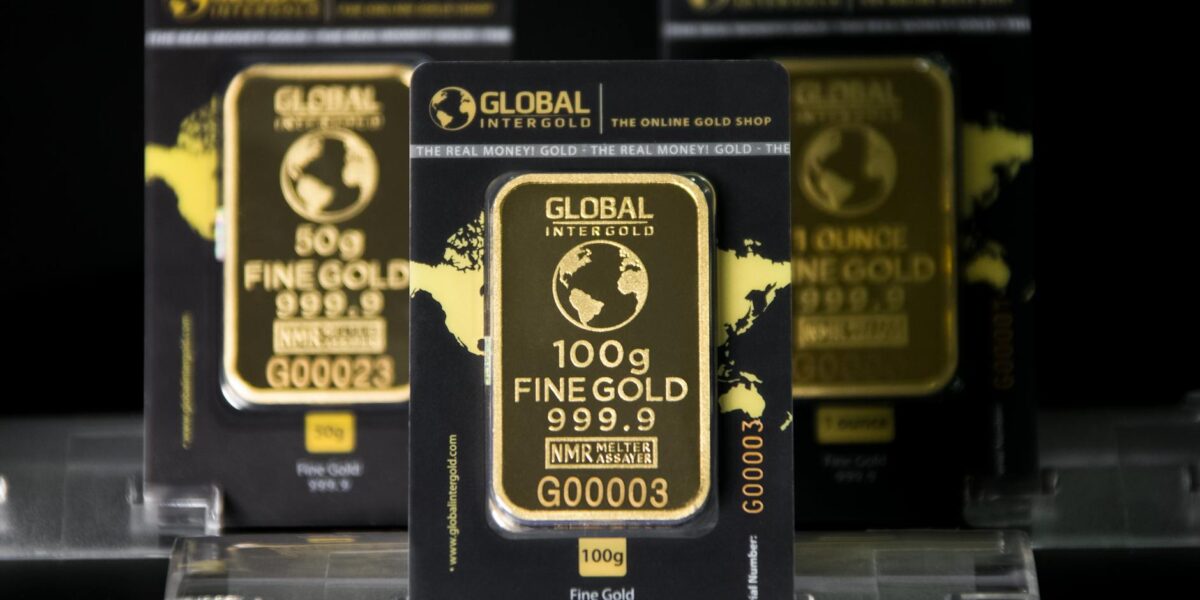
- Gold in India has delivered approximately 13–14% annualised returns over the past 10 years — comparable to many equity mutual funds
- But equity mutual funds have outperformed gold significantly over 15–20 year periods — the longer the horizon, the stronger the equity advantage
- Gold’s real value is as a hedge — it rises when equity markets fall, protecting portfolio value during crises
- The data-supported approach: allocate 10–15% of portfolio to gold permanently, not as an either/or decision
Gold has rallied sharply in 2026 — and Indian investors with ₹5 trillion of household gold savings are asking whether to add more. This is a data-backed comparison of gold versus equity mutual funds across returns, risk, liquidity, and tax treatment, with a specific recommendation for 2026.
India has a complicated relationship with gold. It is simultaneously a cultural asset, a marriage obligation, an inflation hedge, a crisis insurance policy, and — increasingly — a speculative investment. With gold prices near record highs in 2026, more Indian investors are asking whether to add gold to their portfolio or whether equity mutual funds remain the better choice for their savings.
The honest answer is that this is a false choice. Gold and equity mutual funds serve different purposes in a portfolio, and the question of which is “better” depends entirely on what you need the money to do.
Returns Comparison: The Last 20 Years
| Asset | 5-Year CAGR | 10-Year CAGR | 20-Year CAGR |
|---|---|---|---|
| Gold (INR) | ~17–18% | ~13–14% | ~12% |
| Nifty 50 (Total Return) | ~14–16% | ~14–16% | ~16–18% |
| Active Large Cap MF (avg) | ~13–15% | ~13–15% | ~15–17% |
The 5-year numbers favour gold, driven by exceptional global gold performance since 2019. The 10-year and 20-year numbers favour equity. The longer you look, the stronger the equity case becomes. Gold’s strong recent performance is partly cyclical — periods of geopolitical tension, dollar weakness, and inflation tend to favour gold. These conditions will not persist indefinitely.
The Portfolio Role: Why the Question Is Wrong
The reason the gold-versus-equity debate is a false choice is that they behave differently in the same market conditions. Gold and equity have a low-to-negative correlation — they often move in opposite directions. When equity markets fall sharply, gold typically rises or holds value. When equity markets rally strongly, gold often underperforms.
A portfolio that holds only equity has higher expected returns but also higher drawdowns. A portfolio with 10–15% gold alongside equity has modestly lower expected returns but significantly smoother ride — the gold allocation cushions falls, reducing the psychological pressure that causes investors to panic-sell during market downturns.
Gold Investment Options in India in 2026
Physical gold — jewellery, coins, bars — remains the most emotionally satisfying but least financially efficient form of gold ownership. Making charges, storage costs, and insurance reduce the actual return compared to the gold price. For investment purposes, digital gold alternatives are superior. Sovereign Gold Bonds (SGBs), issued by the Government of India, pay a 2.5% annual interest on top of gold price appreciation and are tax-free on maturity after 8 years. Gold ETFs trade on exchanges like shares, with no making charges and low expense ratios. Gold mutual funds invest in Gold ETFs and allow SIP investing with minimum amounts as low as ₹500.
3 Frequently Asked Questions
Q: Should I buy gold at current high prices in 2026?
If you currently have zero gold in your portfolio, building a 10% allocation gradually via SIP in a Gold ETF or gold fund is a rational portfolio construction decision regardless of current price levels. Trying to time a gold purchase based on price levels faces the same problem as timing equity — the price you are waiting for may never come. If you already have significant gold holdings (20%+ of portfolio), adding more at current highs increases concentration risk.
Q: Are Sovereign Gold Bonds still available in 2026?
The government paused fresh SGB issuances in FY25 due to the high cost of the gold price appreciation commitment. Existing SGBs continue to trade on exchanges at a premium. For investors who want gold with the tax benefits of SGBs, purchasing existing SGBs on the secondary market through NSE or BSE remains an option, though the premium over gold price varies.
Q: How is gold taxed compared to mutual funds in India?
Gold ETFs and gold mutual funds held for more than 24 months qualify for long-term capital gains treatment at 12.5% without indexation. Physical gold held for more than 24 months is also taxed at 12.5% LTCG. Sovereign Gold Bonds redeemed at maturity (after 8 years) are completely tax-free. Equity mutual funds held for more than 1 year attract 12.5% LTCG on gains above ₹1.25 lakh per year.
Gold’s cultural role in India is not irrational — it is a multi-century response to monetary instability, political uncertainty, and the absence of formal financial infrastructure in most of the country for most of its history. The instinct to hold gold as wealth outside the financial system was rational for generations of Indians who could not trust banks, could not access capital markets, and needed a portable, liquid store of value. That context has changed significantly for urban professionals with access to regulated financial products. But dismissing gold entirely misses its genuine portfolio role as an uncorrelated asset. The right position is not gold instead of equity — it is gold alongside equity, in proportion to your need for crisis insurance.
