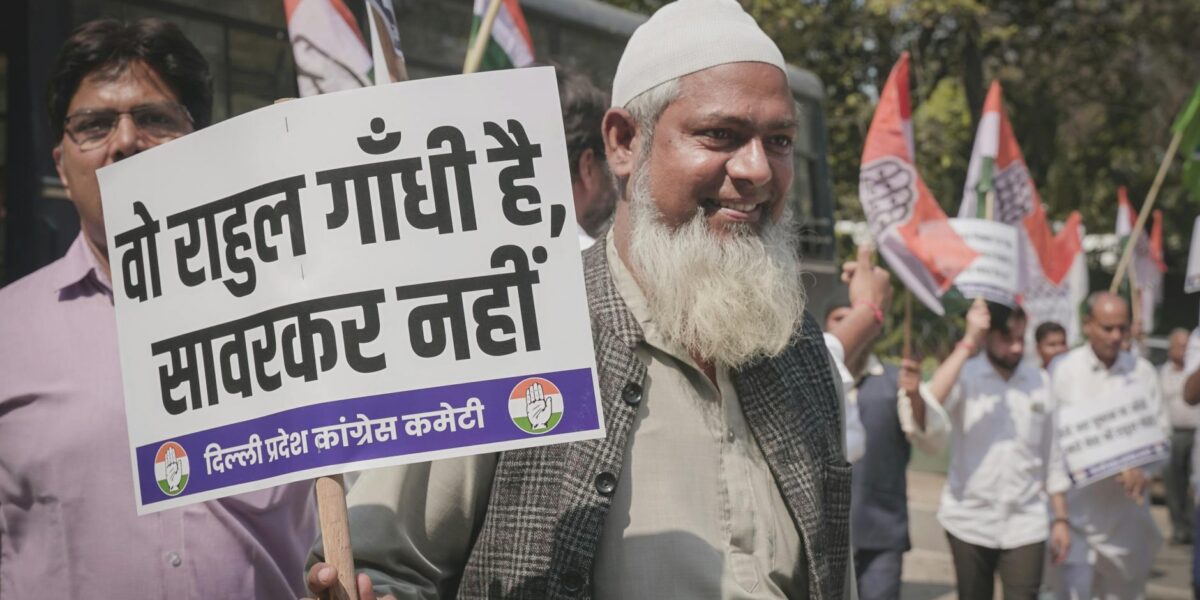
Prime Minister Narendra Modi's BJP has won West Bengal state elections, marking a historic shift in one of India's last major opposition strongholds. This victory significantly reduces organized political opposition nationwide, raising questions about India's democratic balance and business environment.
If you've been seeing headlines about Modi's West Bengal triumph and wondering what it means for India's political landscape, here is what you need to know.
What Is “Opposition-Free India”, Exactly?
An "opposition-free India" refers to a scenario where the ruling Bharatiya Janata Party (BJP) controls most state governments and faces minimal organized political resistance at the national level. This doesn't mean other political parties cease to exist, but rather that they lack the electoral strength or geographic base to effectively challenge the ruling party's policies.
In India's federal system, political power is divided between the central government in New Delhi and 28 state governments. Historically, different parties have controlled different states, creating a natural check on central authority. When opposition parties govern key states, they can resist federal policies, control local resources, and serve as alternative power centers.
The concept becomes significant when one party begins dominating both levels of government simultaneously. This concentration of power can reshape how policies are made, implemented, and challenged across the country.
Why Is This In The News Right Now?
West Bengal, home to 100 million people and India's fourth-largest state economy, had been governed by the Trinamool Congress party since 2011. The state served as one of the last major bastions of anti-BJP sentiment, with Chief Minister Mamata Banerjee positioning herself as a key opposition figure nationally.
BJP's victory in Bengal eliminates one of the most vocal and organizationally strong opposition voices. Combined with recent electoral gains in other traditionally non-BJP states, this win creates an unprecedented level of single-party dominance in India's post-independence history. The victory also removes a significant obstacle to implementing uniform policies across India's diverse states.
Who Does This Affect?
Businesses operating across multiple Indian states will likely see more policy uniformity, as fewer state governments can now resist or modify central initiatives. This affects multinational corporations, domestic conglomerates, and mid-sized companies navigating India's complex federal regulatory environment. Sectors like mining, agriculture, and manufacturing—where state and central jurisdictions overlap—may experience smoother policy implementation.
Civil society organizations, media outlets, and advocacy groups lose a crucial ally in state-level protection against federal pressure. West Bengal's government had previously provided sanctuary for organizations facing central government scrutiny. Independent institutions, including universities and cultural organizations, may find fewer state-level alternatives to central funding and oversight.
The Numbers That Matter
BJP now controls 18 of India's 28 states directly or through alliances, governing approximately 70% of India's population. This compares to just 8 states in 2014 when Modi first became Prime Minister. West Bengal's economy contributes ₹15 lakh crore annually to India's GDP, making it the largest state economy to come under BJP control since the party's national rise.
The electoral mathematics are equally striking. In the Lok Sabha, India's lower house of parliament, opposition parties now hold fewer than 140 seats out of 543. Regional parties, once kingmakers in coalition politics, control just 6 major states compared to 12 in 2014. This consolidation means fewer alternative power centers for businesses, activists, or citizens seeking recourse against central policies.
Opposition fundraising has declined proportionally, with corporate donations flowing increasingly toward the ruling party. This financial reality makes it harder for opposition parties to mount effective campaigns or maintain organizational strength between elections.
What Happens Next?
The immediate focus shifts to the remaining opposition-controlled states, particularly Maharashtra and Delhi, which face elections within the next two years. These states represent the final major urban and economic centers outside BJP control. Their electoral outcomes will determine whether India moves toward complete single-party dominance or retains some federal balance.
Policy implementation will likely accelerate across sectors where state resistance previously created delays. Expect faster rollout of uniform tax structures, agricultural reforms, and industrial policies that faced patchwork implementation due to state-level opposition.
In 60 days this looks very different. West Bengal’s administrative machinery, built around Trinamool’s patronage networks, must now align with BJP’s policy priorities. If you’re planning India investments, factor in reduced regulatory arbitrage between states—the days of shopping for friendly state policies are ending. For news analysis professionals 2026 tracking Indian political risk, the key metric isn’t election results anymore, but how quickly uniform governance actually materializes on the ground.
