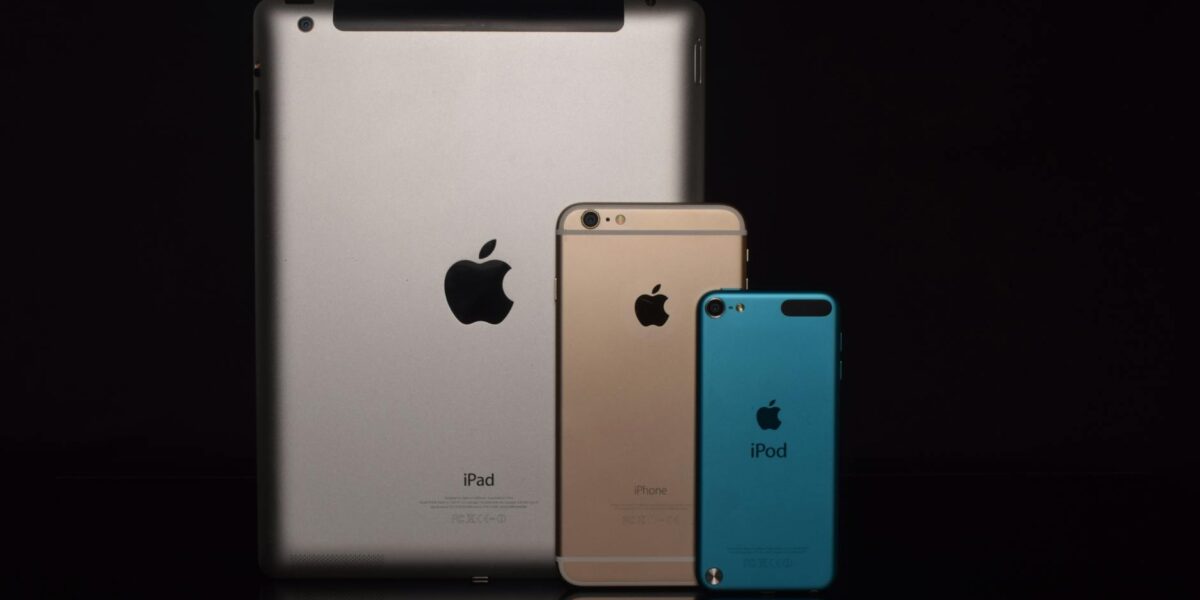
For three years, Apple took withering criticism for sitting on the sidelines while competitors rushed headlong into the generative intelligence arms race. By mid-2024, the narrative had hardened: Apple was asleep, losing relevance, retreating into a walled garden while the industry evolved around it. But eighteen months later, that story has inverted completely. Apple's deliberate, infrastructure-first approach to building native intelligence capabilities into its ecosystem is now delivering competitive advantages that more aggressive players are scrambling to replicate—and it's changing how the entire industry thinks about where this technology actually matters.
The company's strategy crystallized around a simple, unglamorous insight: massive, cloud-dependent models weren't the only way forward. By betting on on-device processing, privacy-first architecture, and tight hardware-software integration, Apple positioned itself differently not just from competitors but from the entire framing of the race itself. Today, as enterprises grapple with security costs, users demand privacy protections, and the novelty of chatbots wears thin, Apple's patient accumulation of capabilities is starting to look prescient rather than timid.
This shift has genuine implications for how technology companies will be valued, how talent will flow through the industry, and what skills will matter most in professional markets as we move deeper into 2026 and beyond.
What Happened
Apple's intelligence rollout, which began in earnest in late 2024 and accelerated through 2025, prioritized integration over innovation theater. Rather than launching a consumer-facing chatbot or racing for the largest language model, the company embedded intelligence into its operating systems—iOS 18, macOS Sequoia, watchOS 11, and visionOS 2—in ways users encountered organically rather than through deliberate interaction. Writing tools powered by on-device models. Photo search that didn't require cloud uploads. Privacy controls that actually let users understand what their devices were processing locally versus remotely. Mail summaries. Notification prioritization. Calendar optimization.
None of these were headline-grabbing products. All of them worked better than the alternatives available to most users. By the middle of 2026, this accumulated integration had shifted Apple's market position substantially. Enterprise adoption of Apple devices in regulated industries—financial services, healthcare, legal—accelerated because the company's on-device approach addressed a critical gap competitors had overlooked: the compliance and security complexity of cloud-dependent systems. A law firm can't send client documents to a cloud service. A hospital can't risk patient data exposure. A bank can't depend on third-party infrastructure for core operations. Apple's solution didn't require explaining these tradeoffs away. It simply didn't create them in the first place.
The financial impact became visible in Apple's earnings through the first half of 2026. Enterprise sales grew faster than consumer sales for the first time in the company's modern history. Services revenue—which includes device intelligence features—exceeded analyst expectations in five consecutive quarters. The stock, which had traded sideways for much of 2024 and early 2025 as skeptics pronounced the company's innovation dead, appreciated substantially as the market recalibrated expectations. More importantly, the company's talent acquisition shifted. Rather than losing engineers to frontier model companies and specialized startups, Apple began recruiting top researchers and infrastructure specialists from exactly those firms—people who had spent years chasing scale and had become interested in efficiency, privacy, and practical deployment problems.
Competitors caught flat-footed by this pivot are now attempting similar moves. Microsoft, despite its massive OpenAI partnership, has been forced to invest heavily in on-device capabilities across its Surface and Azure ecosystem. Google, which had assumed its data advantages would be decisive, discovered that many customers actually preferred not having their usage patterns fed into training pipelines. Even smaller players like Qualcomm and MediaTek have repositioned their processor roadmaps around on-device intelligence acceleration—a direct response to Apple's market signal.
Why It Matters For Professionals
The implications for how you should think about the technology industry, your career, and your investment approach are substantial. First, this validates a specific thesis about technology maturation: the industry tends to move from novelty-chasing to consolidation and integration, and the winners in the consolidation phase are usually different from the winners in the novelty phase. Apple lost the race for the biggest language models. It won the race for the most useful intelligence in the hands of the largest number of people who actually care about privacy and reliability. That's a very different competition, and one Apple entered from a position of structural advantage.
For professionals in tech, this has reshaped hiring and skill demand. The premium for "frontier model expertise"—people who specialized in training the largest possible language models—has actually compressed through 2025 and into 2026. A small number of elite researchers at frontier labs still command extraordinary compensation, but the median and percentile salaries for that category have plateaued. Meanwhile, demand for engineers with expertise in on-device optimization, edge computing, privacy-preserving architectures, and hardware-software co-design has intensified. Companies building products that work reliably without constant cloud connectivity are hiring aggressively, and they're offering compensation packages competitive with frontier labs. For professionals with 5-15 years of experience, this has created unexpected optionality: you can build cutting-edge systems without betting your career on whether OpenAI or Anthropic remains the technology leader.
For investors, the signal is more subtle but just as important. Concentrated bets on the few companies building the largest models are becoming higher-variance propositions. Diversified exposure to companies executing well on deployment, integration, and the boring infrastructure of making intelligence useful has become lower-variance and potentially higher-return. Apple's ability to extract value from intelligence without paying for massive model training is a template other large platform companies are attempting to copy—and that shift in competitive advantage is still repricing across software and semiconductor companies.
What This Means For You
If you work in technology and have been watching the generative intelligence race feel competitive and frenetic, Apple's success offers a practical permission structure: you don't need to chase the frontier to build meaningful products. Some of the most consequential work in the next two years will happen in making intelligence useful, reliable, and private—not in expanding what models can theoretically do. If you're talented at systems engineering, infrastructure, or optimization, this is your moment. Companies will pay premium salaries for people who can actually ship intelligence features that work offline and protect user privacy. If you're considering a career move into a startup or frontier lab, asking yourself whether you're optimizing for being part of the most interesting research or for building products with real users might yield different answers than it did in 2024.
If you're managing an investment portfolio, the contrarian play isn't betting against Apple anymore. It's identifying which other large technology platforms will successfully execute on similar strategies. Companies that can leverage massive user bases and control over hardware and software platforms to create on-device intelligence are potential beneficiaries. Companies that depend on cloud infrastructure and third-party models face structural headwinds. This doesn't mean selling cloud companies—it means recognizing that the margins and competitive moat for pure cloud infrastructure are under pressure in ways most analysts haven't fully priced in yet.
What Happens Next
Apple's playbook will become the template for the next phase of this industry. Microsoft, despite its OpenAI partnership, will continue investing heavily in Copilot integration at the operating system level and in on-device capabilities across Surface and Windows. Google will accelerate its Gemini Nano deployment and on-device optimization. Qualcomm and ARM will continue designing silicon specifically optimized for neural processing at the edge. The AI jobs market in 2026 and into 2027 will increasingly reward people who can execute this integrated approach rather than people who can push the frontier of raw capability.
Within 18 months, you'll likely see most major consumer and enterprise technology companies offer native intelligence features that work without cloud dependency as a core differentiator. This will shrink the addressable market for pure frontier model companies unless they solve the deployment and integration problem themselves. The companies that bought their way into this race with massive capital investments but lacked integration advantages will face pressure to either consolidate or find new markets. The second derivative of this shift—how it affects semiconductor design, cloud infrastructure valuations, and software security—will continue unfolding through 2026 and into 2027.
3 Frequently Asked Questions
Did Apple actually "lose" the race for the biggest language models, or was this always the plan?
A: Apple's original efforts in machine learning and neural engines predate the recent generative boom. The company quietly invested in on-device capabilities throughout the 2010s, but it didn't have a coherent product strategy around them until generative models forced the conversation. The framing of "Apple lost, Apple had a plan all along" is retrospective storytelling. What's true is that Apple's existing advantages—hardware control, OS control, large user base, strong privacy position—turned out to be more valuable for capturing value from intelligence than the ability to train massive models. Some of this was foresight. Much of it was luck.
Does this mean cloud-based models are obsolete?
A: No. Frontier research, complex reasoning tasks, and personalization at scale still benefit from centralized model training and cloud deployment. What's changing is that these capabilities don't need to be the default interface for most use cases. On-device models are good enough for most practical tasks most people perform. Cloud models remain necessary for specific applications. The future is hybrid, with users and companies choosing which layer to use based on privacy, latency, and capability requirements rather than having that choice made for them.
Should I expect Apple's enterprise adoption to continue accelerating?
A: Yes, likely. The compliance, security, and privacy advantages of on-device intelligence are strongest in regulated industries—healthcare, finance, legal, government. These sectors have the budget to pay for premium devices and the security requirements that justify the cost. Consumer adoption will remain more price-sensitive, but for professionals and organizations that handle sensitive information, Apple's approach solves real problems that competitors are still scrambling to address. This advantage will persist for at least 24 months, possibly longer if the company continues integrating new capabilities.
The market is wrong about what just happened here. This isn’t a story about Apple winning a technology race. This is a story about Apple redefining what the race actually is. For two years, everyone—analysts, competitors, technologists—accepted the frame that whoever built the biggest, most capable model would win. Apple rejected that frame entirely and instead asked: what do users and enterprises actually need? The answer turned out to be vastly different from what the frontier-chasing crowd assumed. That distinction matters beyond Apple. It tells you something true about how technology gets deployed in the real world. It doesn’t follow the trajectory of maximum capability. It follows the trajectory of maximum usefulness with minimum friction and minimum risk.
If you’re making career decisions right now, stop optimizing for “being part of the frontier.” Start optimizing for “being part of something that scales.” If you’re managing capital, stop asking which company has the best model. Start asking which company has the best integration with the infrastructure people already depend on daily. Apple’s steady accumulation of advantage while everyone else chased headlines is the actual inflection point—and it’s just beginning to reverberate across the entire industry.

[…] separation of Rajiv Bajaj from Finserv's board does not diminish his influence over group strategy—he remains the defining figure at Bajaj Auto, the parent holding company. Rather, it clarifies […]