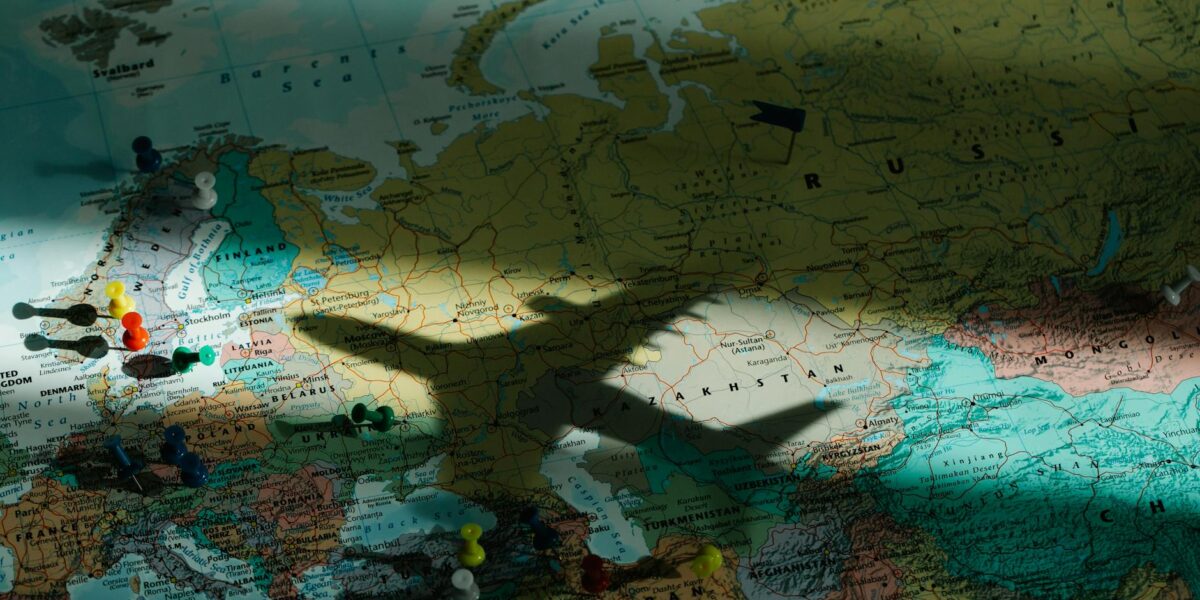
Britain's signals intelligence chief has issued a stark warning: Russia is becoming more dangerous, not less, even as its military position in Ukraine deteriorates. The director of GCHQ, Britain's electronic surveillance agency, cautioned that Moscow is pivoting toward asymmetric warfare—cyber attacks, disinformation, and covert operations—precisely because conventional warfare is proving costlier and less effective. This shift represents a fundamental recalibration of how Russia projects power, with profound implications for Western economies and energy markets already on edge.
The warning, delivered at a high-level security briefing this week, signals that Western intelligence agencies are tracking a troubling pattern: Russia's mounting losses in Ukraine are not tempering aggression but redirecting it into domains where it believes it has structural advantages. This escalation comes at a moment when global markets remain hypersensitive to geopolitical shocks, particularly in energy. The conflict's drag on oil supply chains has already created price volatility that ripples through everything from airline fuel costs to manufacturing inputs across Asia. A renewed wave of Russian cyber operations targeting energy infrastructure—in Europe, the US, or allied nations—could trigger the kind of supply disruption that sends crude prices spiking unpredictably.
For India, which imports roughly 80% of its crude oil and maintains careful diplomatic balance between Russia and the West, this warning carries specific weight. Any escalation in Russia's covert operations that destabilizes global energy markets directly affects India's import bills and inflation trajectory. New Delhi has also become an increasingly attractive target for Russian disinformation and cyber activity, particularly as Indian tech and financial infrastructure grows in strategic importance.
What Happened
The GCHQ director's assessment, made during classified briefings to senior British government officials and shared with allied intelligence partners through Five Eyes channels, reflects months of intelligence analysis documenting a shift in Russian operational strategy. As Ukraine consumes Russian military resources at unsustainable rates—requiring constant resupply of ammunition, vehicles, and personnel—Moscow appears to be doubling down on intelligence operations, cyber attacks, and information warfare where it can inflict damage with lower resource expenditure.
Specific incidents have reinforced this pattern. Over the past six months, intelligence agencies have attributed a rising number of sophisticated cyber attacks on critical infrastructure in NATO countries to Russian state-backed actors. These attacks have targeted energy grids in Eastern Europe, telecommunications networks in the Nordics, and financial systems across multiple jurisdictions. The GCHQ assessment notes that these operations are becoming more coordinated, technically sophisticated, and harder to attribute—suggesting deeper integration between Russian military intelligence (GRU) and civilian intelligence agencies (FSB) in campaign planning.
The warning also highlights Russia's aggressive expansion of disinformation operations targeting Western publics. Intelligence indicates that Russian operations are becoming more culturally calibrated, less obviously propagandistic, and better integrated with authentic social movements and legitimate political grievances across Western democracies. The goal appears to be eroding institutional trust, exacerbating existing social divisions, and constraining Western governments' ability to respond cohesively to Russian actions—whether in Ukraine or elsewhere.
Simultaneously, Russia is intensifying intelligence operations in Africa, Central Asia, and South Asia, seeking to expand influence in regions where Western presence is weaker and strategic competition with China offers opportunities for Moscow to position itself as an alternative power broker. India, given its size, strategic location, and energy vulnerability, appears to be a particular focus area for Russian intelligence outreach and cyber reconnaissance.
Why It Matters For Professionals
For investors and business professionals, this intelligence assessment carries several material implications. First, it suggests that geopolitical risk premiums in commodity markets—particularly oil and natural gas—are unlikely to fall in the near term. Energy traders should expect continued volatility because the threat of supply disruptions from cyber attacks or escalated conflict remains real and unpredictable. This volatility makes hedging strategies and dynamic portfolio positioning essential for companies with exposure to energy costs.
Second, the warning implies that cybersecurity investments will remain a priority for governments and corporations alike. This trend benefits cybersecurity firms, defense contractors specializing in critical infrastructure protection, and companies offering enterprise security solutions. For professionals in these sectors, job security and compensation growth remain robust because demand for skilled cybersecurity personnel significantly outpaces supply.
Third, multinational corporations operating in Europe, particularly those dependent on energy inputs or with critical infrastructure components, face heightened operational risk. Supply chain resilience—shifting away from single-source dependencies or geographically concentrated operations—is becoming a competitive necessity rather than a luxury. Companies that have already undertaken such shifts have a strategic advantage; those that have not face operational vulnerability that could translate into earnings surprises or operational disruptions.
For Indian professionals and businesses, the implications are more nuanced. India's tech sector, which handles vast amounts of data for Western clients, may face increased scrutiny around cybersecurity protocols and data residency requirements. Indian financial services firms operating cross-border will likely face higher compliance costs as Western regulators tighten standards for defending against state-sponsored cyber threats. Simultaneously, Indian energy companies and import-dependent manufacturers should prepare for price volatility in crude oil and other commodities—a factor that directly affects margins and profitability.
The broader message for professionals is this: geopolitical stability is not a binary condition but a spectrum. Russia's shift toward asymmetric operations suggests a conflict that is becoming more unpredictable, not more contained. Markets that have begun pricing in a potential "resolution" to the Ukraine situation should recalibrate expectations. This conflict is likely to remain an active drag on global economic conditions and a source of tail-risk events for years.
What This Means For You
If you hold positions in energy stocks, commodities, or companies with significant exposure to oil and gas price fluctuations, the intelligence assessment warrants a portfolio review. The consensus among market participants appears to be that crude prices have normalized around $70-80 per barrel, but a significant cyber attack on energy infrastructure in a major producing or transit region could spike prices 15-25% in a matter of days. Stress-test your portfolio for this scenario. Ensure that your allocation to defensive sectors—utilities, consumer staples, healthcare—is sufficient to cushion against energy-driven economic slowdowns.
If you work in cybersecurity, defense technology, or critical infrastructure sectors, this warning is essentially a job security guarantee. Skills in network defense, threat intelligence, incident response, and infrastructure resilience will command premium compensation for the foreseeable future. Consider certifications or skill development in emerging areas like AI-powered threat detection or zero-trust architecture implementation. If you are in India and work in IT services or business process outsourcing, heightened scrutiny around cybersecurity practices may create short-term compliance costs but ultimately strengthens your company's positioning as a trusted service provider to Western corporations.
For business owners and entrepreneurs, particularly those in India's energy-dependent sectors, begin stress-testing your cost structures for sustained elevated crude prices. The war impact on oil prices has already lasted longer than most predicted; plan for it to persist. Diversify supply chains away from geographies where cyber attacks pose elevated risk. If you are considering expansion into Europe, build cybersecurity and data protection capabilities into your operational planning from the outset—it is no longer optional.
What Happens Next
Over the next 3-6 months, expect NATO and allied governments to announce new cybersecurity directives targeting critical infrastructure operators. These will likely include mandatory incident reporting, enhanced monitoring requirements, and coordinated response protocols. Energy companies, particularly those in Europe, will face compliance deadlines. This creates near-term disruption but establishes baseline standards that ultimately benefit mature, well-resourced companies over smaller competitors.
Russia's intelligence operations will likely continue to intensify in scope and geographic reach, particularly targeting countries perceived as vulnerable or strategically important. Watch for coordinated disinformation campaigns targeting India's energy sector or financial stability ahead of major policy announcements or elections. The intelligence warning suggests that Russian operations are becoming more sophisticated at exploiting legitimate domestic political debates, so heightened media literacy and institutional vigilance will be essential.
Energy markets will remain volatile, with crude prices vulnerable to supply shock narratives. Any credible reports of cyber incidents affecting major oil infrastructure—whether in the Middle East, Central Asia, or Eastern Europe—should be expected to trigger immediate price spikes. For investors and businesses, this volatility is a feature, not a bug, of the current environment. Position accordingly.
3 Frequently Asked Questions
Could a Russian cyber attack on oil infrastructure actually spike crude prices meaningfully?
A: Yes. Historical precedent exists: the 2019 drone attacks on Saudi Aramco facilities briefly removed 5.7 million barrels per day from global supply and spiked prices 10-15% in hours. A sustained cyber attack that compromised refining or pipeline operations could easily trigger similar moves. Given current crude prices around $75-80 per barrel, a 20% spike would push prices above $90, significantly raising transportation and manufacturing costs globally.
Why is Russia becoming more aggressive despite losing the war in Ukraine?
A: Escalation in asymmetric operations—cyber attacks, disinformation, intelligence operations—is a rational response to military stalemate. Russia cannot win a conventional war against Ukraine and NATO through direct military superiority, so it is attempting to achieve strategic objectives through lower-cost, deniable operations that degrade Western cohesion and create economic disruption. This is not irrational; it is a strategic recalibration.
What should Indian companies do to prepare for escalating geopolitical risk?
A: First, audit cybersecurity protocols and ensure compliance with evolving Western standards—this becomes table stakes for cross-border operations. Second, diversify energy sourcing and build hedging strategies for crude price volatility. Third, develop contingency plans for supply chain disruptions, particularly if operations depend on European suppliers or transit routes. Finally, strengthen institutional communications to counter potential disinformation campaigns targeting your sector or company.
Why is no one talking about the fact that Russia’s pivot toward cyber and covert operations is actually more destabilizing than kinetic warfare? In Ukraine, at least the fighting is confined to a specific geography. But cyber attacks, disinformation, and intelligence operations are invisible, borderless, and inherently unpredictable. This means geopolitical risk will remain embedded in markets for years, not months.
Here is what you should do: First, if you are managing institutional capital or running a business with significant commodity exposure, stop assuming crude oil reverts to pre-2022 levels. Build a cost structure that survives $90+ crude. Second, audit your company’s cybersecurity posture immediately—not because compliance is fashionable, but because the threat surface is expanding. Third, if you work in technology or services, prioritize security certifications and infrastructure skills. They will be valuable in demand and command premium compensation.
The market is still pricing in stability. It should not be.

[…] had been pricing in four more years of Biden's approach: gradual de-escalation with Russia, continued U.S. support for Ukraine at a calibrated level, incremental climate spending, and a […]